Stay Informed With Trusted Health Insights
Join 5,000+ readers who receive evidence-informed health articles, wellness tips, supplement reviews, and practical health guides delivered straight to their inbox.
Get Free Health UpdatesNo spam. Just helpful health education, updates, and resources.
If you’ve ever experienced nerve pain alongside muscle twitching, cramping, or restless “buzzing” sensations—especially at night—you are not imagining the connection. Nerves and muscles operate as one electrical system. When that system becomes overstimulated, pain and twitching often appear together.
One of the most common (and most overlooked) contributors to this overstimulation is magnesium status.
Magnesium supports:
- Nerve signaling balance
- Muscle relaxation
- Calcium regulation
- Stress response control
- Sleep quality and nervous system recovery
This guide explains how magnesium works for nerve pain and twitching, which forms are best, how to dose safely, and when magnesium is most likely to help.
For a full systems overview, start here:
Nerve Health Hub (#1)
https://thehealthknowledgebase.com/nerve-health/
Why Magnesium Matters for Nerves (Not Just Muscles)
Magnesium is often thought of as a “muscle mineral,” but its most important role may be neurological.
Magnesium helps regulate:
- The threshold at which nerves fire
- The balance of excitatory vs calming signals
- The movement of calcium into and out of nerve cells
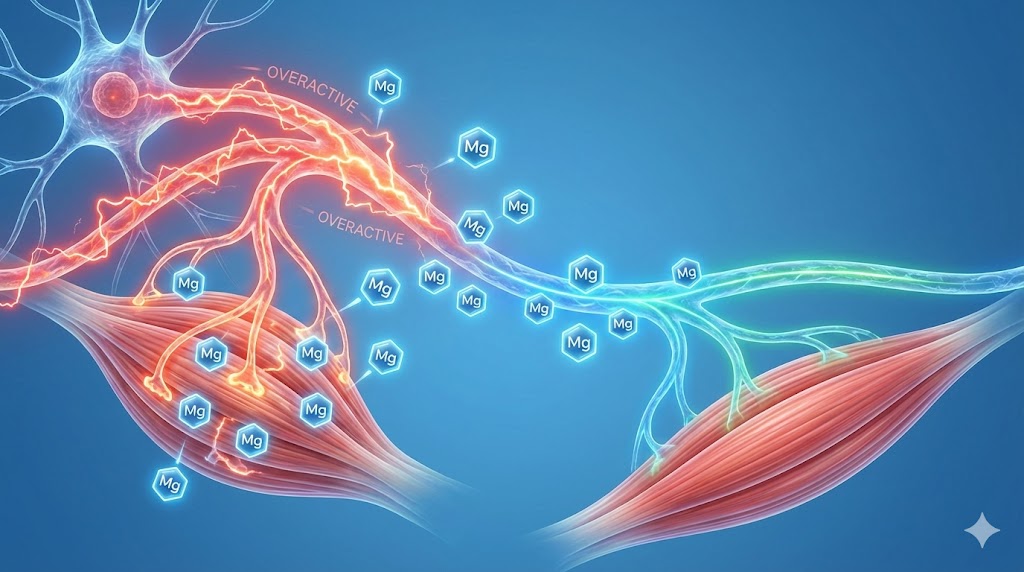
When magnesium is low, nerves can become hyperexcitable, leading to:
- Burning or electric nerve sensations
- Pins-and-needles tingling
- Heightened pain perception
- Muscle twitching, spasms, and cramps
If you are building a full nerve-support strategy, magnesium is typically evaluated alongside foundational vitamins and metabolic antioxidants, covered in the Best Nerve Supplements pillar (#3):
https://thehealthknowledgebase.com/nerve-health/nerve-supplements/
The Nerve–Muscle Connection: Why Twitching Often Appears With Neuropathy
Many people with neuropathy report:
- Calf cramps at night
- Foot spasms
- Eyelid twitching
- Random “jumping” muscles
- Restless leg sensations
- Tingling that worsens in bed
These symptoms often reflect dysregulated nerve signaling plus muscle irritability. Magnesium influences both sides of that equation.
For broader symptom context, see:
Peripheral Neuropathy: Causes, Symptoms & Natural Relief (#4)
https://thehealthknowledgebase.com/nerve-health/peripheral-neuropathy/
How Magnesium Helps Nerve Pain (Mechanisms That Matter)
1) Magnesium Calms Nerve Firing (Reduces Hyperexcitability)
Nerve pain is often worse when nerves “misfire.” Magnesium acts as a natural stabilizer—helping nerves fire appropriately rather than excessively.
This is particularly relevant in pain described as:
- Burning
- Electric
- Shooting
- Hot/cold sensations
- “Crawling” or buzzing feelings
2) Magnesium Regulates Calcium (Prevents Overstimulation)
Calcium triggers muscle contraction and plays a role in nerve transmission. Magnesium helps regulate calcium’s effects so that nerves and muscles don’t become overstimulated.
In practical terms, adequate magnesium can reduce:
- Cramping frequency
- Twitch intensity
- Muscle tightness related to nerve irritation
3) Magnesium Supports Sleep and Nervous System Recovery
Nerve symptoms often worsen at night due to:
- Lower distraction
- Increased stress signaling
- Poor sleep quality
- Reduced circulation
Magnesium supports relaxation pathways that can improve sleep quality and reduce symptom intensity at night.
If your nerve pain worsens at night, the broader management framework is here:
Nerve Pain Management: Natural & Medical Options (#5)
https://thehealthknowledgebase.com/nerve-health/nerve-pain-management/
4) Magnesium May Help Neuropathy Indirectly via Metabolic Support
In diabetic or blood-sugar-related neuropathy, magnesium status is frequently suboptimal. Magnesium supports insulin signaling and metabolic stability, which can reduce ongoing nerve stress.
If blood sugar is a likely contributor, review:
Diabetic Neuropathy & Blood Sugar–Related Nerve Damage (#6)
https://thehealthknowledgebase.com/nerve-health/diabetic-neuropathy/
Who Magnesium Helps the Most (Best-Fit Profiles)
Magnesium tends to help most when symptoms include:
- Muscle twitching or spasms + nerve pain together
- Night cramps or restless leg sensations
- Stress-related symptom flares
- Poor sleep + nerve symptoms
- Neuropathy with metabolic risk (prediabetes/diabetes)
It may be less impactful if nerve pain is driven primarily by:
- Severe compression
- Advanced structural nerve degeneration
- Untreated spinal pathology
Best Forms of Magnesium for Nerve Pain and Twitching
Not all magnesium supplements are equal. The “best” form depends on your goal: relaxation, digestion tolerance, or energy support.
Magnesium Glycinate
Best for: relaxation, sleep, nervous system calm
Why: gentle on the stomach, calming effect
Magnesium Malate
Best for: muscle discomfort + energy support
Why: supports cellular energy metabolism
Magnesium Threonate
Best for: cognitive/brain-related support
Why: crosses the blood–brain barrier more effectively (often used for neurological focus)
Magnesium Citrate
Best for: constipation + magnesium repletion
Note: can loosen stools (not ideal if you already have digestive sensitivity)
Rule of thumb: For nerve pain + twitching + sleep disruption, glycinate is often the most practical starting point.
Dosage Guidance (Practical and Safe)
Magnesium dosing is individualized. In many cases, people start with a lower dose and adjust based on tolerance.
Typical starting approach
- Begin low (especially if sensitive)
- Increase gradually over 1–2 weeks if needed
- Take in the evening if the primary goal is relaxation/sleep
If you are using magnesium as part of a complete nerve stack, it pairs well with the nutrient foundations explained in:
Best Vitamins for Nerve Repair and Regeneration (#8)
https://thehealthknowledgebase.com/nerve-health/nerve-supplements/best-vitamins-for-nerve-repair/
How Long Does Magnesium Take to Work?
Magnesium can affect muscle twitching faster than nerve repair nutrients because it stabilizes excitability.
Typical timelines:
- Days to 2 weeks: sleep quality, cramping frequency, twitching
- 2–6 weeks: reduced nerve “buzzing” / irritability
- 6–12 weeks: best evaluation window when combined with other nerve supports
For a complete timeline framework across supplements, see:
How Long Do Nerve Supplements Take to Work? (#15)
https://thehealthknowledgebase.com/nerve-health/nerve-supplements/how-long-to-work/
Safety, Side Effects, and Who Should Use Caution
Magnesium is generally safe, but you should use extra caution if:
- You have kidney disease
- You take certain medications that affect electrolytes
- You are stacking multiple supplements that contain magnesium
Possible side effects:
- Loose stools (more common with citrate)
- Drowsiness if taken in higher doses
- Stomach discomfort if taken without food (varies by form)
For broader interaction guidance, see:
Are Nerve Supplements Safe? Side Effects & Interactions (#14)
https://thehealthknowledgebase.com/nerve-health/nerve-supplements/safety-side-effects/
Magnesium vs Other Nerve Supplements (Where It Fits)
Magnesium is best viewed as a stabilizer (calming excitability), while other compounds address different root mechanisms:
- Alpha-Lipoic Acid (#9) → oxidative stress and metabolic nerve protection
https://thehealthknowledgebase.com/nerve-health/nerve-supplements/alpha-lipoic-acid/ - B Vitamins (#10) → myelin, neurotransmitters, and nerve repair foundations
https://thehealthknowledgebase.com/nerve-health/nerve-supplements/b-vitamins-neuropathy/ - Acetyl-L-Carnitine (#12) → mitochondrial energy + regeneration signaling
https://thehealthknowledgebase.com/nerve-health/nerve-supplements/acetyl-l-carnitine/
Together, these create a balanced strategy under the main pillar:
https://thehealthknowledgebase.com/nerve-health/nerve-supplements/
✅ FAQs
- Does magnesium help nerve pain?
It can help calm nerve excitability and reduce symptom intensity, especially when twitching/cramps are present. - What type of magnesium is best for nerve pain?
Magnesium glycinate is often preferred for calming and sleep support. - Can magnesium help neuropathy?
It may support symptom relief and nervous system regulation, particularly in metabolic-related neuropathy. - How long does magnesium take to work for twitching?
Some notice improvement within days to two weeks, depending on deficiency status. - Can magnesium stop muscle twitching?
It can reduce twitching related to electrolyte imbalance or nerve hyperexcitability. - Is magnesium safe every day?
Generally yes, within appropriate dosing and with normal kidney function. - Why does nerve pain get worse at night?
Reduced distraction, stress signaling, and sleep disruption can amplify nerve symptoms. - Can magnesium lower blood pressure?
It may have mild blood pressure effects in some people. - Can I take magnesium with B vitamins?
Yes, they are commonly combined in nerve support strategies. - Who should avoid magnesium supplements?
People with kidney disease or those on certain medications should consult a clinician first.
Support Nerve Repair with the Right Nutrients
Learn which vitamins and supplements support nerve regeneration and how to choose safely.
REGROW Nerves 64% Faster
According to Nature, you can now regenerate your nerves 64% faster.
All you need to do is this 5-second stem cell trick.
See, while stem cells are famous for regrowing damaged tissues and more youthful skin…
This bizarre ritual taps into the “stem cells of your nerves” & rebuilds them FAST.

Medically Reviewed for Accuracy
This content has been reviewed for accuracy and clarity by The Health Knowledge Base Medical Review Team, using current research and evidence-based health guidance.
Our review process helps ensure that information related to health, wellness, nutrition, lifestyle strategies, and natural support topics reflects current scientific understanding and responsible editorial standards.
Written by The Health Knowledge Base Editorial Team
Our editorial team consists of health researchers, wellness writers, and content specialists focused on creating clear, practical, and research-informed health content.
We publish educational articles designed to help readers better understand health topics, explore natural wellness strategies, and make more informed lifestyle decisions with confidence.
Affiliate Transparency, Medical Disclaimer & Safety Notice
At The Health Knowledge Base, we take pride in being a trusted resource and affiliate partner with select, high-quality companies. We choose these partnerships carefully because we genuinely believe their products, services, and educational resources align with the values and mission of our website.
When you purchase through certain links on this site, we may receive a small commission or compensation. This helps support our research, content creation, and ongoing work at no additional cost to you. Your price remains exactly the same.
Medical Disclaimer
The information provided by The Health Knowledge Base is for general informational and educational purposes only and is not a substitute for professional medical advice, diagnosis, or treatment.
Always seek the advice of your physician, doctor, or another qualified healthcare provider with any questions you may have regarding a medical condition, symptoms, treatment options, diet changes, exercise programs, or supplements.
Never disregard professional medical advice or delay in seeking it because of something you have read on this website.
Critical Safety Notice
Before making any changes to your diet, starting a new fitness or wellness routine, or taking any supplements mentioned on this site, you should consult with your doctor, physician, or another qualified healthcare professional. Reliance on any information provided by The Health Knowledge Base is solely at your own risk.
View our Affiliate Disclosure → | View our Medical Disclaimer →