






Do you ever feel like you can’t quite get a full, satisfying breath? Like you’re constantly running on half-empty lungs?
If so, you’re not alone. And the cause might not be what you think.
For millions, the problem isn’t just mucus or inflammation—it’s that they’ve forgotten how to breathe correctly. They’re stuck in a cycle of shallow, inefficient “chest breathing” that starves the body of oxygen and keeps the lungs weak.
But what if you could “reset” your breathing in just minutes a day?
A 2023 study published in the Journal of Physical Therapy Science confirmed what ancient healers knew: a simple, natural breathing technique can significantly improve lung capacity, reduce stress, and even help clear stubborn mucus.
It’s called Diaphragmatic Breathing—and it’s the single most effective exercise for restoring your lung health and calming your nervous system.
The Shocking Truth: You’re Probably Breathing Wrong
Take a breath right now.
Did your shoulders rise and your chest puff out? If so, you’re a “chest breather.” This type of shallow breathing:
- Uses only the top third of your lungs, leaving the bottom two-thirds stagnant.
- Engages accessory muscles in your neck and shoulders not designed for breathing, causing tension.
- Triggers a low-grade “fight or flight” stress response in your body.
- Makes you feel more short of breath, even when your lungs are capable of more.
Diaphragmatic breathing, often called “belly breathing,” is the way we were designed to breathe. It’s how babies and sleeping adults breathe naturally. It’s the secret to efficient, powerful lungs.
What is the Diaphragm and Why is it Your Lung’s Best Friend?
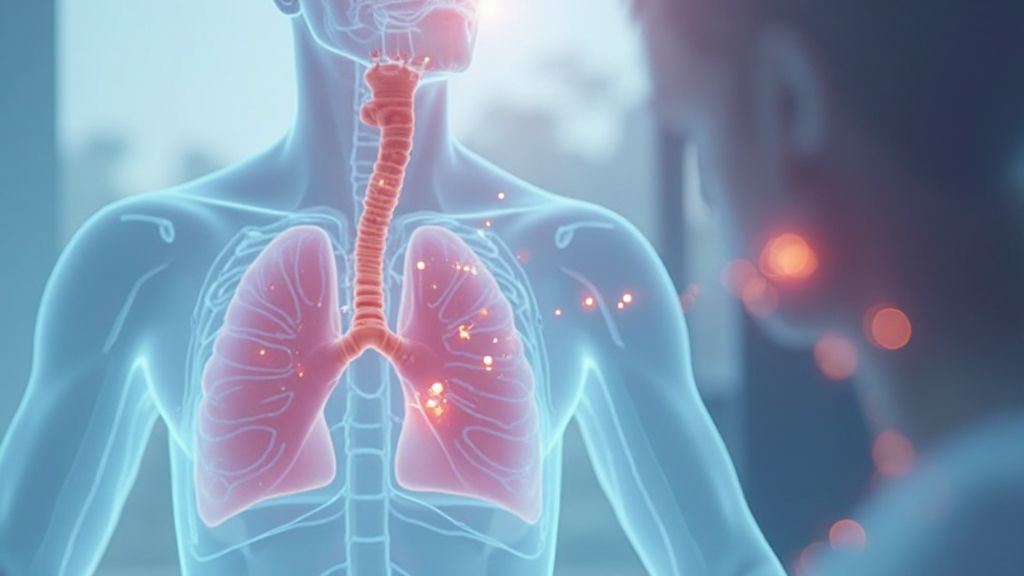
Your diaphragm is a large, dome-shaped muscle that sits beneath your lungs, separating your chest from your abdomen. It’s your primary breathing muscle.
When you breathe in correctly, your diaphragm contracts and flattens downward. This creates a vacuum that pulls air deep into the lower lobes of your lungs, where 80% of your blood’s oxygen exchange occurs.
Think of your diaphragm as the piston that powers your lungs. A strong, flexible diaphragm means stronger, more efficient lungs.
The 5 Proven Benefits of Diaphragmatic Breathing (Backed by Science)
This isn’t just “feel-good” advice; it’s a powerful therapeutic tool.
- Strengthens Your Lungs & Improves Oxygen Efficiency: A study on COPD patients found that diaphragmatic breathing training significantly improved lung function tests and oxygen saturation levels.
- Calms Your Nervous System Instantly: It stimulates the vagus nerve, switching your body from “fight or flight” (sympathetic) to “rest and digest” (parasympathetic) mode, reducing cortisol and anxiety.
- Helps Clear Stubborn Mucus: The deep, rhythmic movement of the diaphragm creates a gentle “pumping” action that can help mobilize and loosen mucus in the lower airways, making it easier to cough up.
- Lowers Blood Pressure and Heart Rate: By calming the nervous system, it helps relax blood vessels, improving circulation.
- Boosts Core Stability & Posture: Your diaphragm is a core muscle! Proper breathing engages your deep core and encourages better posture, which in turn allows your lungs more space to expand.
The 3-Minute “Lung Reset” Breathing Technique (Step-by-Step)
You can do this anywhere, anytime. For best results, practice for 3-5 minutes, 2-3 times a day.
Step 1: Get Into Position
Sit comfortably in a chair with your feet flat on the floor, or lie on your back with your knees bent. Place one hand on your upper chest and the other on your belly, just above your navel.
Step 2: The “Reset” Exhale
Take a slow breath out through your mouth, feeling your belly gently draw inward. Imagine you’re fogging up a pair of glasses.
Step 3: The Deep “Belly” Inhale
Now, slowly breathe in through your nose for a count of 4. Focus on letting the air fill your belly. Your goal is to make the hand on your belly rise, while the hand on your chest remains relatively still.
Step 4: The Power Pause
Hold your breath for a count of 4, allowing the oxygen to fully saturate your bloodstream.
Step 5: The Controlled Exhale
Slowly exhale through your mouth for a count of 6, feeling your belly fall as you gently squeeze all the air out. This longer exhale is key to activating relaxation.
Repeat this cycle for 3-5 minutes.
- Inhale (Nose, 4 counts) → Hold (4 counts) → Exhale (Mouth, 6 counts)
Common Mistakes to Avoid (Don’t Force It!)
- Mistake #1: Raising Your Shoulders. Your upper chest should be quiet. The movement comes from your belly.
- Mistake #2: Breathing Too Forcefully. This should be a gentle, relaxed wave-like motion, not a strenuous effort.
- Mistake #3: Giving Up Too Soon. It feels unnatural at first because you’ve spent years breathing incorrectly. Stick with it for a week. It will become second nature.
Also Read: Other common lung health mistakes to avoid.
When to Practice for Maximum Impact
- First Thing in the Morning: To set a calm, oxygen-rich tone for your day.
- During a Stressful Moment: To instantly lower your heart rate and regain control.
- After Physical Activity: To help your lungs recover efficiently.
- Before Bed: To calm your mind and prepare your body for deep, restorative sleep.
The Bottom Line: Your Lungs Are Waiting to Be Rediscovered
Diaphragmatic breathing is more than an exercise—it’s a return to your body’s natural blueprint for health. It requires no equipment, costs nothing, and can be done anywhere. By investing just a few minutes a day, you are strengthening your most vital muscle for life, calming your mind, and taking a powerful step toward clearing your lungs for good.
Ready to breathe easy again? Start your 3-minute practice today.
Diaphragmatic Breathing: Your Questions Answered
1. How long until I see benefits from diaphragmatic breathing?
Many people feel immediate calmness after just one session. For lasting improvements in lung capacity and reduced anxiety, consistent practice for 2-4 weeks typically shows noticeable results.
2. I feel dizzy when practicing – is this normal?
Yes, mild dizziness can occur initially as your body adjusts to increased oxygen levels. This usually subsides within a few sessions. If it persists, try slowing your breathing pace or practicing for shorter periods.
3. Can diaphragmatic breathing help with asthma or COPD?
Absolutely. Multiple studies show it can improve lung function, reduce medication use, and decrease anxiety in both asthma and COPD patients. However, always consult your doctor before making changes to your treatment plan.
4. What’s the best time of day to practice?
Morning practice sets a calm tone for your day, while evening practice can improve sleep quality. Many experts recommend both morning and night for maximum benefits.
5. Why can’t I feel my diaphragm moving?
This is common for beginners! Try lying on your back with a light book on your stomach. Watch the book rise and fall with each breath. With 2-3 weeks of consistent practice, you’ll develop better muscle awareness.
6. Can this help with anxiety and panic attacks?
Yes! Diaphragmatic breathing activates the parasympathetic nervous system, which counteracts the “fight or flight” response. It’s one of the fastest natural ways to reduce anxiety symptoms.
7. How is this different from “belly breathing”?
They’re essentially the same technique! “Diaphragmatic breathing” is the medical term, while “belly breathing” is the common description. Both focus on engaging the diaphragm rather than chest muscles.
8. Should I breathe through my nose or mouth?
For inhalation, nose breathing is preferred as it filters, warms, and humidifies air. For exhalation, gentle mouth breathing can help with the extended exhale. Find what feels most natural for you.
9. Can I overdo diaphragmatic breathing?
While generally very safe, practicing for more than 10-15 minutes continuously might cause lightheadedness. Start with 3-5 minute sessions, 2-3 times daily, and gradually increase as comfortable.
10. Will this help clear mucus from my lungs?
Yes! The diaphragm’s pumping action helps mobilize mucus in the lower airways. For best results, combine with proper hydration and specific mucus-clearing techniques and supplements.
📚 Master Your Breathing Technique
Pursed-Lip Breathing Guide
Learn how to stop shortness of breath instantly with this complementary breathing technique.
Master Technique →Yoga for Lung Capacity
Discover the best yoga poses to open your chest and increase lung capacity naturally.
Explore Poses →Natural Lung Detox Methods
Complement your breathing practice with 7 science-backed lung cleansing techniques.
Learn Methods →Still Have Questions? We Have Answers.
Lung health is complex. If you’re wondering “What about…?” or “What’s next for me?”, you’re not alone. Our Resource Hub is built to be your **first stop for trustworthy, in-depth answers** on every aspect of respiratory wellness.
- Condition-Specific Guides (COPD, Asthma, Post-COVID)
- Step-by-Step Detox & Recovery Plans
- Science-Backed Natural & Conventional Strategies