


The Annoying After-Drop: Understanding and Solving Post-Void Dribbling
You’ve finished urinating, zipped up, and taken a few steps away from the toilet when you feel it—that unwelcome, damp trickle in your underwear. Post-void dribbling (PVD) is one of the most common and frustrating urinary symptoms for men with BPH. It’s not just a nuisance; it can erode confidence, complicate social situations, and force you to constantly plan around “cleanup” routines.
The good news? While PVD is incredibly common with an enlarged prostate, it’s also one of the most treatable symptoms with simple, non-invasive strategies. This guide explains exactly why it happens and gives you five practical solutions you can start implementing today to stay dry and confident.
The Anatomy of a Dribble: Why BPH Causes This
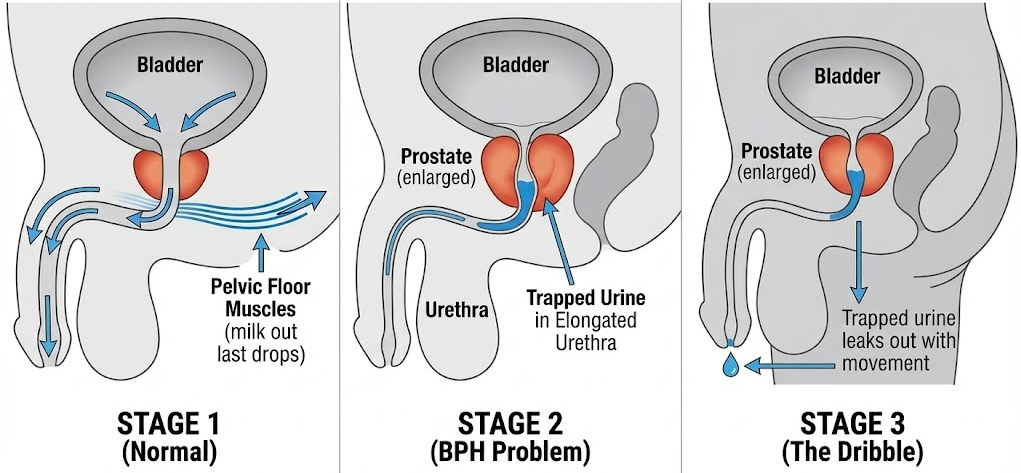
To fix the problem, understand the mechanics. Normal urination involves:
- Bladder Contraction: Your bladder muscle squeezes.
- Sphincter Relaxation: The urinary sphincter opens.
- Prostate Channel: Urine flows through the prostatic urethra.
- Complete Emptying: The bladder empties, the sphincter closes, and the last few drops in the urethra are “milked” out by pelvic floor muscles.
With BPH, this system breaks down:
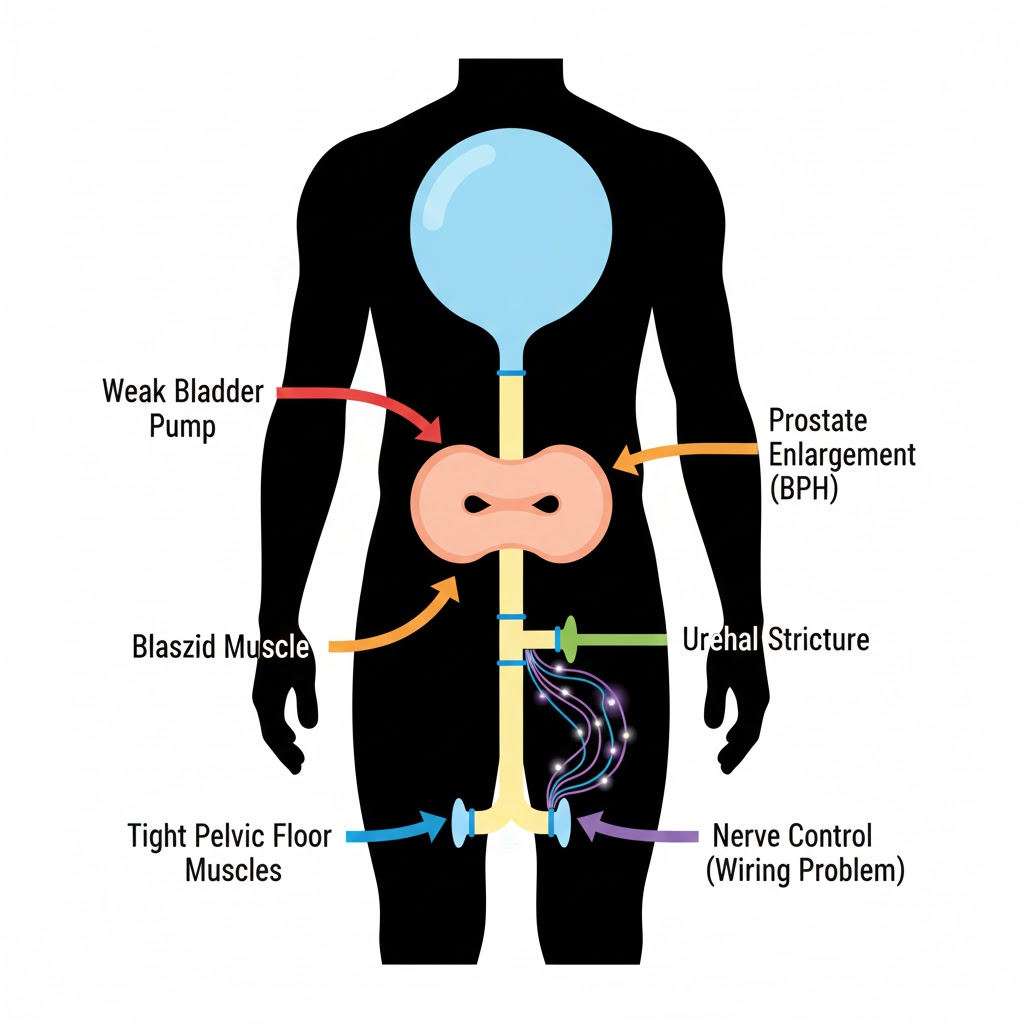
- The Plumbing Problem: The enlarged prostate pinches and elongates the urethra, creating a “puddle” in the prostatic urethra that doesn’t drain by gravity.
- The Weak Pump Issue: Your bladder may not contract strongly enough to fully expel all urine.
- The Pelvic Floor Factor: Weakened pelvic floor muscles fail to perform the final “milk-out” of the urethra after you think you’re done.
The result? Urine remains trapped in the lengthened urethra (the “urethral conduit”). When you walk away, move, or simply relax, that trapped urine dribbles out.
5 Simple Solutions to Stop the Dribble
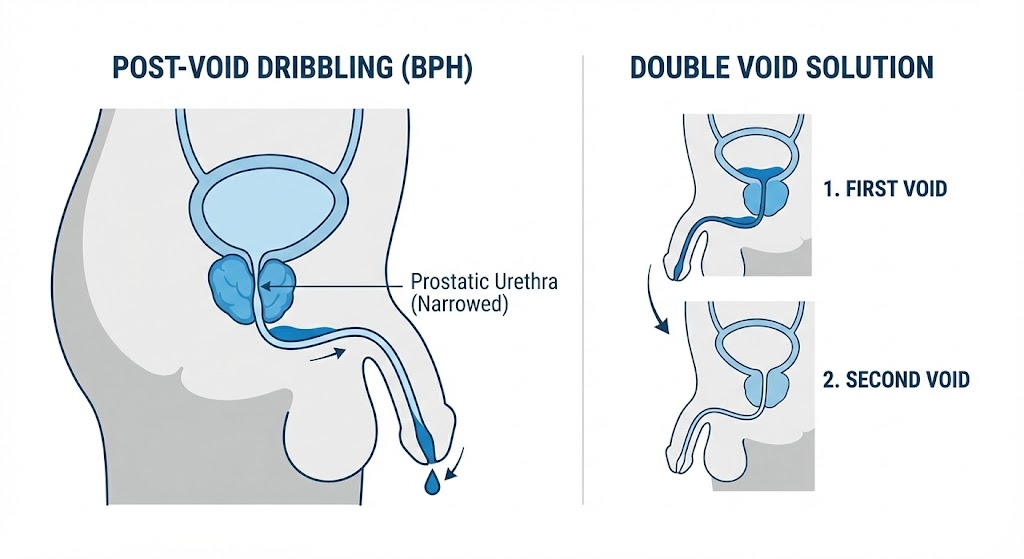
Solution 1: Master the “Double Void” Technique
This is your first and most effective line of defense.
How to do it correctly:
- Urinate normally.
- Wait 30-60 seconds. Stay at the toilet. Shift your weight from foot to foot, or gently rock forward and backward. This allows your pelvic floor to fully relax and the urethra to “reset.”
- Try to urinate again. Don’t strain. Just relax and allow any remaining urine in the urethral conduit to flow out. You’ll often release a surprising second stream.
Why it works: It addresses the trapped urine in the elongated urethra directly. It’s not “more urine from the bladder”—it’s urine that was stuck in the pipes.
Solution 2: Strengthen Your Pelvic Floor Muscles (The “Milk-Out” Muscles)
Weak pelvic floor muscles can’t perform the final squeeze to empty the urethra. Targeted strengthening is crucial.
The Right Exercise: This isn’t just about Kegels. Focus on endurance holds and quick contractions.
- After-Emptying Squeeze: Right after you finish urinating (and after double voiding), perform 3-5 strong pelvic floor contractions, holding each for 3-5 seconds. This actively “milks” the urethra.
- Daily Training: Follow our comprehensive Pelvic Floor Exercises for BPH Guide for a full strengthening program.
Pro Tip: Ensure you’re doing the exercises correctly. A common mistake is bearing down instead of lifting up. Place a hand on your lower abdomen—it should stay soft.
Solution 3: Apply Gentle Manual Pressure (The “Crede Maneuver”)
A simple physical technique to manually assist emptying.
How to do it safely:
- After urinating, lean forward slightly.
- Place the heel of your hand just above your pubic bone (lower abdomen).
- Apply gentle, downward pressure and sweep toward the base of your penis.
- Combine this with a pelvic floor contraction.
Caution: Be very gentle. Never use forceful pressure. This should feel like a helping hand, not a punch.
Solution 4: Optimize Your Toilet Position & Posture
How you sit or stand matters more than you think.
For Sitting:
- Lean Forward: Rest your elbows on your knees. This position straightens the urethra and increases abdominal pressure slightly to aid emptying.
- Use a Squatty Potty or footstool to raise your knees above your hips. This relaxes the pelvic floor.
For Standing:
- Widen your stance and lean forward slightly against the wall or sink.
- Avoid the “hover” over public toilets—it tenses the pelvic floor and worsens emptying.
Solution 5: Implement Smart Clothing & Hygiene Strategies
While you’re working on the root cause, manage the symptom effectively.
- Shake, Then Wait: After finishing, give a gentle shake, THEN wait 30 seconds (perhaps while washing your hands) before putting yourself away. Often, the dribble happens in that first 30-second window.
- Use a “Dribble Pouch”: Place a small square of toilet paper or a specially designed urine dribble pad (like a small absorbent liner) in the tip of your underwear after urinating. It catches the dribble discreetly. Change it at your next bathroom visit.
- Wear Dark-Colored, Patterned Pants: This minimizes the visual impact of any small leaks while you’re implementing the other solutions.
- Carry a “Clean-Up Kit”: A small ziplock bag with a travel-sized wet wipe and a small absorbent pad in your briefcase or car can be a confidence-saver.
When to See a Doctor: Red Flags & Further Evaluation
While PVD is usually benign, consult your urologist if:
- The dribble becomes a continuous leak (not just post-void).
- You experience pain or burning with urination.
- You see blood in your urine.
- You develop fever or chills (sign of infection).
- The solutions above provide no improvement after 4-6 weeks of consistent practice.
Your doctor may want to check your post-void residual (PVR) urine via ultrasound to see how much urine remains in your bladder after voiding. A high PVR suggests an underlying emptying problem that might need medical management.
Common Mistakes That Make Dribbling Worse
- Straining to Empty: Pushing hard increases abdominal pressure, which can actually weaken pelvic floor support over time.
- “Milking” Yourself Aggressively: Forceful stripping of the penis can cause trauma and inflammation.
- Drinking Less to Urinate Less: Dehydration concentrates urine, making it more irritating and can worsen bladder instability.
- Ignoring Constipation: A full rectum presses on the bladder and urethra. Maintain regular bowel movements.
The Connection to Other BPH Symptoms
Post-void dribbling rarely occurs in isolation. It’s often linked to:
- Weak stream (same obstructive cause)
- Feeling of incomplete emptying (related muscle dysfunction)
- Urgency (overactive bladder component)
Addressing dribbling through the methods above often improves these related symptoms too. Consider tracking all your symptoms together with our BPH Self-Assessment Quiz & Symptom Tracker.
Conclusion: Take Control of the After-Drip
Post-void dribbling is a mechanical problem with mechanical solutions. You don’t have to accept it as an inevitable part of aging or BPH.
Your Action Plan for This Week:
- Start with Double Voiding at every bathroom visit.
- Add 3-5 after-void pelvic floor squeezes.
- Adjust your toilet posture (lean forward, use a stool).
- Use a discreet management strategy (like a dribble pouch) for confidence as you train.
- Be patient and consistent—muscle retraining takes 4-8 weeks.
Remember: A small amount of dribble (a few drops) is very common. The goal is to minimize it to a point where it no longer affects your confidence or requires you to change your underwear multiple times a day. With these strategies, that goal is absolutely within reach.
Navigate Our Complete BPH Hub:
- Silo 1: BPH Symptoms & Daily Management (You are here)
- Silo 2: Medical & Surgical Treatments
- Silo 3: Natural Remedies & Lifestyle
- Main Hub: The Complete Guide to BPH & Prostate Health
FAQs
1. Is post-void dribbling a sign of prostate cancer?
No, not typically. PVD is almost always related to benign mechanical issues—BPH, weak pelvic floor muscles, or urethral anatomy. Prostate cancer rarely causes urinary symptoms unless very advanced. However, any new or changing urinary symptom warrants a check-up with your doctor to rule out other issues.
2. How much dribble is “normal”?
A few drops (less than a teaspoon) is common and considered within the range of normal, especially for men over 50 with BPH. Concerning amounts would be enough to soak through your underwear, require a pad, or occur continuously rather than just after voiding. The “bother” factor is key—if it bothers you, it’s worth addressing.
3. Can medications like Flomax help with dribbling?
Yes, they often do. Alpha-blockers (Flomax, Rapaflo) relax the smooth muscle in the prostate and bladder neck, which can improve bladder emptying and reduce the amount of urine left in the urethral conduit. However, they come with potential side effects like dizziness and retrograde ejaculation. Behavioral techniques (like those above) are good first-line options.
4. Will prostate surgery (TURP, UroLift) cure dribbling?
It often significantly improves it, but doesn’t guarantee 100% cure. Surgical procedures widen the channel, allowing more complete emptying. However, if weak pelvic floor muscles are a contributing factor, that issue may persist post-op and require separate rehabilitation. Surgery addresses the plumbing; you may still need to address the pump (bladder) and muscles.
5. Why does the dribble sometimes happen minutes or even an hour later?
This is usually due to urine being trapped in bulges or pockets (diverticula) of the urethra, often in the bulbar or penile urethra. When you change position (sit, bend over, walk), that trapped urine is released. The double void technique and manual pressure are specifically designed to empty these areas.
6. I only dribble when I’m stressed or anxious. Why?
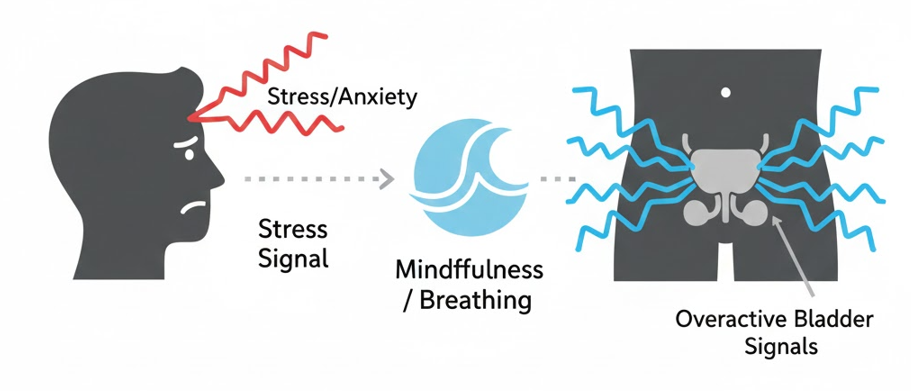
Stress causes involuntary tightening of the pelvic floor muscles. This tension can prevent complete relaxation during urination, leading to poorer emptying and more trapped urine. It can also make you less mindful of your voiding technique. Our Stress Management for BPH Flare-Ups guide can help.
7. Are there any products or devices that can help?
Yes, a few:
- Penile Clamp: A temporary external device that gently compresses the urethra. Used sparingly for specific situations (e.g., a long meeting), not daily.
- Absorbent Liners/Pads: Designed for men (“dribble pouches” or small pads) that fit in the front of underwear.
- Compression Underwear: Provides gentle support and can contain small leaks.
- Biofeedback Devices: Like the Elvie or Perifit, to ensure you’re doing pelvic floor exercises correctly.
8. Can diet or supplements help reduce dribbling?
Not directly. No supplement “tightens” the urethra. However, an overall anti-inflammatory diet and lifestyle that supports prostate health may slow BPH progression. Avoiding bladder irritants (caffeine, alcohol) might reduce overall urinary urgency and frequency, making you less rushed in the bathroom, which can improve emptying technique. See our Anti-Inflammatory Diet Plan.
9. Is dribbling worse in cold weather?
It can be. Cold temperatures can cause muscle tensing, including in the pelvic floor. This “guarding” response can impair relaxation during voiding. Additionally, you may drink different fluids (more hot caffeine) in winter. Dressing warmly and staying relaxed can help.
10. I’m young (30s-40s) and have this. Is it still BPH?
Possibly, but less likely. In younger men, PVD is more often due to:
- Pelvic floor dysfunction (too tight or weak from sitting/sports)
- Urethral stricture (scarring from infection or injury)
- Neurological issues affecting coordination
A urologist can help determine the cause with tests like uroflowmetry and possibly cystoscopy.
Related Articles
- Pelvic Floor Exercises for BPH: Strengthen Your “Milk-Out” Muscles: The most important long-term solution for dribbling.
- Weak Urine Stream? 5 Causes Beyond BPH: Understand the underlying obstruction that contributes to dribbling.
- BPH and Sexual Health: Managing Ejaculation Issues: Learn about retrograde ejaculation, a different but related issue.
- Bladder Retraining for BPH: Increase Your Capacity: Improve overall bladder control and emptying efficiency.