






Part of our Testosterone Health Hub
Anxiety affects millions of men, yet the role hormones play in emotional health is often overlooked. While stress, lifestyle, and life circumstances can contribute to anxiety, hormones such as testosterone may also influence mood, confidence, and stress resilience.
Testosterone is not just a reproductive hormone. It plays a role in energy levels, cognitive performance, emotional stability, and motivation. When levels decline, some men report changes in mood, increased irritability, or greater sensitivity to stress.
Understanding the relationship between testosterone and anxiety can help identify whether symptoms are related to lifestyle factors, hormonal changes, or a combination of both.
If you want a broader overview of hormone health, start with our Complete Guide to Testosterone: Symptoms, Testing, and Natural Support .
How Testosterone Affects Stress and Anxiety
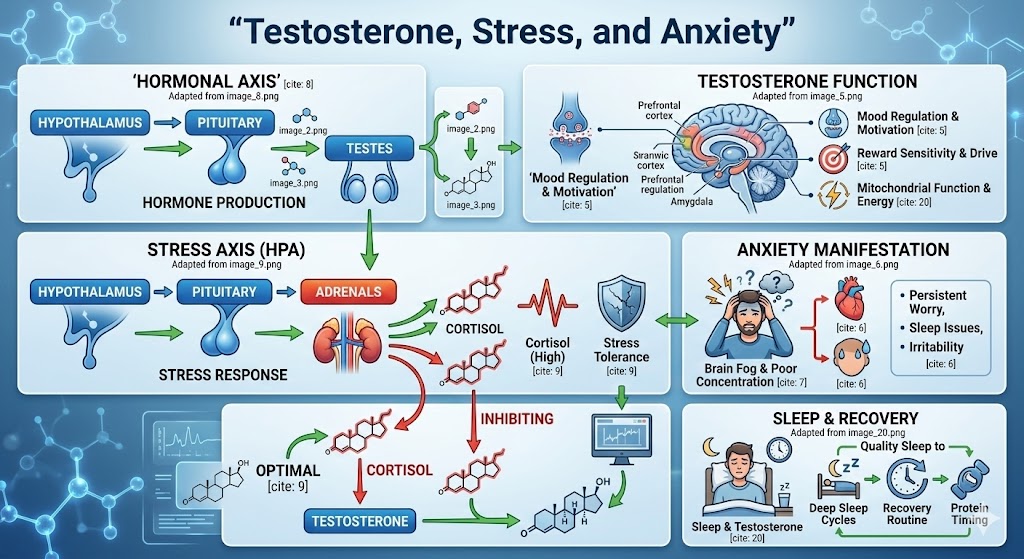
Testosterone influences several systems that regulate emotional responses and stress resilience.
Research suggests testosterone may affect:
- dopamine signaling (motivation and reward)
- serotonin pathways related to mood
- stress hormone regulation
- sleep and recovery cycles
Because of these interactions, testosterone levels may influence how the brain responds to stress and emotional pressure.
For a foundational overview, read What Is Testosterone? Functions, Levels, and Why It Matters .
Symptoms That May Overlap With Anxiety
Hormonal imbalance can sometimes create symptoms that resemble anxiety disorders.
These symptoms may include:
- nervousness or restlessness
- reduced stress tolerance
- irritability
- racing thoughts
- poor sleep quality
- reduced confidence or motivation
However, it is important to remember that anxiety has many potential causes, and hormones are only one possible factor.
Many men experiencing hormonal changes also report other symptoms such as fatigue, reduced libido, and weight gain. These are discussed in Low Testosterone Symptoms in Men .
The Role of Cortisol in Anxiety
Anxiety and stress are closely connected to the hormone cortisol.
When the body experiences chronic stress, cortisol levels remain elevated. Over time this can disrupt hormonal balance and suppress testosterone production.
This interaction may create a cycle:
- chronic stress raises cortisol
- cortisol suppresses testosterone
- low testosterone worsens fatigue and stress tolerance
This hormonal feedback loop can sometimes contribute to anxiety-like symptoms.
For a deeper explanation, see High Stress and Cortisol: How They Suppress Testosterone .
Sleep, Testosterone, and Anxiety
Sleep plays a critical role in hormone production and emotional health.
Poor sleep can lead to:
- reduced testosterone levels
- increased cortisol
- impaired emotional regulation
- increased anxiety symptoms
Testosterone production occurs largely during deep sleep cycles. When sleep quality declines, hormone levels may decline as well.
For more information, read Sleep and Testosterone: How Deep Sleep Drives Hormone Production .
Can Low Testosterone Cause Anxiety?
Some studies suggest that low testosterone may contribute to symptoms of anxiety in certain men. Testosterone appears to influence brain regions involved in emotional regulation and stress response.
However, anxiety is rarely caused by hormones alone. Other factors often play a significant role, including:
- chronic stress
- sleep deprivation
- metabolic health issues
- nutrient deficiencies
- lifestyle habits
- mental health conditions
Because of this complexity, evaluating symptoms requires a holistic perspective.
Men who experience anxiety alongside fatigue, reduced libido, or declining physical performance may want to review What Causes Low Testosterone? The Most Common Hidden Drivers .
Lifestyle Factors That Influence Both Testosterone and Anxiety
Several lifestyle habits influence both hormonal health and mental wellbeing.
Important factors include:
Exercise
Strength training and regular physical activity can support hormone health while also improving stress resilience and mood.
Learn more in Best Workouts for Testosterone: Strength Training Principles That Work .
Body Composition
Excess body fat is associated with lower testosterone levels and metabolic stress, which may indirectly influence mood and anxiety.
See Body Fat and Testosterone: Why Belly Fat Lowers T .
Nutrition and Micronutrients
Certain nutrients play a role in hormone production and nervous system health.
Important nutrients include:
- zinc
- magnesium
- vitamin D
These nutrients are discussed in Zinc, Magnesium, and Vitamin D for Testosterone .
Can Supporting Testosterone Help Reduce Anxiety?
In some men, improving hormone balance through lifestyle changes may also improve energy levels, motivation, and emotional stability.
Strategies that may help include:
- improving sleep quality
- reducing chronic stress
- regular resistance training
- improving metabolic health
- addressing nutrient deficiencies
Some men also explore natural supplements designed to support hormone balance.
To compare ingredient research and supplement formulas, see Best Testosterone Boosters: Reviews, Ingredients, and Buyer’s Guide .
When Should You Consider Testosterone Testing?
Testing may be helpful when anxiety symptoms occur alongside physical signs of hormonal imbalance.
Examples include:
- persistent fatigue
- reduced libido
- increased body fat
- declining strength
- poor recovery
Testing should be done properly because hormone levels fluctuate throughout the day.
Start with these guides:
Key Takeaway
Testosterone and anxiety are connected through complex interactions involving stress hormones, sleep, metabolism, and brain chemistry.
Low testosterone does not always cause anxiety, but hormonal imbalance may contribute to symptoms such as fatigue, irritability, reduced motivation, and increased stress sensitivity in some men.
If anxiety appears alongside physical symptoms like low libido, weight gain, or declining energy, evaluating lifestyle factors and hormone health may help identify potential causes.
To explore the full topic, visit the Testosterone Health Hub .
Related Articles
- Low Testosterone Symptoms in Men
- Testosterone and Depression
- High Stress and Cortisol
- Sleep and Testosterone
- Best Testosterone Boosters
FAQ
Can low testosterone cause anxiety?
Low testosterone may contribute to anxiety symptoms in some men, particularly when hormonal decline affects energy, sleep, and stress resilience.
Does stress lower testosterone?
Yes. Chronic stress increases cortisol, which can suppress testosterone production over time.
Can improving testosterone reduce anxiety?
Improving sleep, exercise, metabolic health, and hormone balance may help improve mood and stress tolerance in some men.
Should men with anxiety test their testosterone?
If anxiety occurs alongside fatigue, reduced libido, and declining physical performance, hormone testing may help determine whether testosterone is a contributing factor.
Understand the Full Testosterone Picture
Hormones influence energy, mood, strength, metabolism, and sexual health. Understanding how testosterone works can help you identify symptoms early and explore safe ways to support healthy hormone balance.
Read the Complete Testosterone Guide Compare Testosterone Boosters