






Part of our Testosterone Health Hub
Depression in men is often attributed to stress, burnout, or life circumstances. While those factors certainly matter, hormones may also play a role. Testosterone influences brain chemistry, mood regulation, energy levels, and motivation, which means declining hormone levels can sometimes overlap with symptoms of depression.
Understanding the connection between testosterone and mental health can help men determine whether lifestyle changes, hormone testing, or professional evaluation might be appropriate.
If you are new to the topic, start with our Complete Guide to Testosterone: Symptoms, Testing, and Natural Support to understand how testosterone affects the body and brain.
How Testosterone Influences Mood
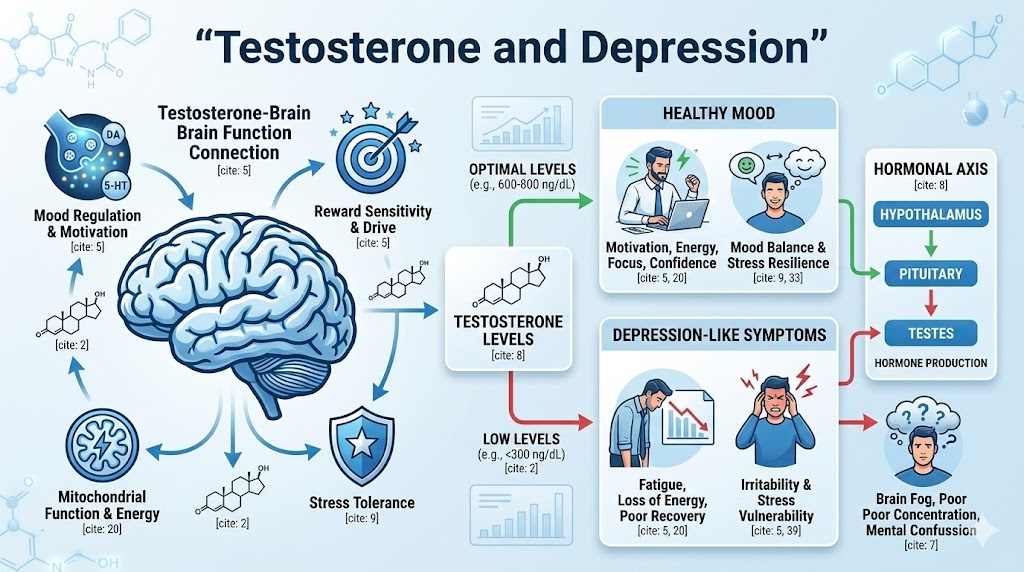
Testosterone is widely known for its role in muscle mass and sexual health, but it also influences several systems involved in emotional regulation.
Research suggests testosterone can affect:
- neurotransmitters such as dopamine and serotonin
- motivation and reward pathways in the brain
- stress resilience and energy levels
- sleep quality and recovery
When testosterone levels decline, some men report mood changes including reduced motivation, lower confidence, irritability, and fatigue.
For a broader overview of hormone function, see What Is Testosterone? Functions, Levels, and Why It Matters.
Symptoms That May Overlap With Depression
Low testosterone and depression share several overlapping symptoms. This can make it difficult to identify the root cause without a comprehensive evaluation.
Fatigue and Low Energy
Men experiencing hormonal decline often describe a persistent drop in physical and mental energy. Even after a full night of sleep, they may feel exhausted or unmotivated.
Fatigue can also appear alongside other hormonal symptoms such as reduced libido or weight gain.
If you are experiencing these symptoms, review Low Testosterone Symptoms in Men: Physical, Mental, and Sexual Signs.
Reduced Motivation and Drive
Many men experiencing hormonal shifts report a decline in ambition or motivation. Activities that previously felt rewarding — including exercise, hobbies, or social interaction — may suddenly feel less appealing.
Testosterone influences dopamine signaling, which plays a key role in motivation and reward.
Irritability or Mood Changes
While depression is often associated with sadness, men frequently experience mood changes differently. Symptoms may appear as:
- irritability
- frustration
- emotional numbness
- reduced resilience to stress
These changes can sometimes resemble chronic stress or burnout.
To compare these conditions, see Low Testosterone or Burnout? How to Tell the Difference.
Brain Fog and Difficulty Concentrating
Testosterone may also influence cognitive performance.
Men with declining levels sometimes report:
- difficulty concentrating
- slower mental processing
- forgetfulness
- reduced focus
Brain fog can also result from sleep deprivation or chronic stress.
Sleep quality plays a critical role in hormone regulation. Learn more in Sleep and Testosterone: How Deep Sleep Drives Hormone Production.
Stress, Cortisol, and Mood
Mental health is influenced by more than one hormone. Chronic stress raises cortisol levels, which can suppress testosterone production over time.
This hormonal interaction can create a feedback loop:
- stress increases cortisol
- cortisol suppresses testosterone
- low testosterone worsens fatigue and mood
Understanding this relationship is essential for addressing both physical and emotional symptoms.
For more detail, read High Stress and Cortisol: How They Suppress Testosterone.
Does Low Testosterone Cause Depression?
Research suggests low testosterone may contribute to depressive symptoms in some men, particularly when levels fall significantly below normal ranges.
However, depression is a complex condition influenced by many factors, including:
- genetics
- life stress
- sleep quality
- metabolic health
- nutrition
- physical activity
Testosterone may be one contributing factor rather than the sole cause.
Because symptoms overlap with many other conditions, testing and professional evaluation are often necessary to determine whether hormones are involved.
When Should You Consider Testosterone Testing?
If depressive symptoms appear alongside physical symptoms of low testosterone, testing may be useful.
Examples include:
- persistent fatigue
- declining libido
- increased belly fat
- reduced muscle mass
- lower motivation
Proper testing is important because testosterone fluctuates during the day.
Start with these guides:
- Testosterone Testing 101: Total vs Free Testosterone
- Best Time to Test Testosterone: Morning Labs, Fasting, and Repeat Testing
Lifestyle Factors That Affect Mood and Testosterone
Many lifestyle factors influence both testosterone levels and mental health.
Key contributors include:
- sleep quality
- exercise habits
- body composition
- stress levels
- nutrition
For example, excess body fat is associated with lower testosterone and reduced metabolic health.
Learn more here: Body Fat and Testosterone: Why Belly Fat Lowers T
Nutrition also matters. Key micronutrients involved in hormone health include zinc, magnesium, and vitamin D.
See Zinc, Magnesium, and Vitamin D for Testosterone: What Actually Helps.
Can Improving Testosterone Improve Mood?
In some men, improving testosterone levels through lifestyle changes can lead to improvements in mood, energy, and motivation.
Strategies that may help include:
- strength training
- improving sleep quality
- reducing chronic stress
- improving metabolic health
- addressing nutrient deficiencies
Some men also explore natural supplements designed to support hormone balance.
To compare options and ingredients, see Best Testosterone Boosters: Reviews, Ingredients, and Buyer’s Guide.
Key Takeaway
Depression and low testosterone share several overlapping symptoms, including fatigue, reduced motivation, irritability, and cognitive changes.
While hormones may contribute to mood changes in some men, they are rarely the only factor involved. Sleep, stress, lifestyle habits, and metabolic health all play important roles.
If symptoms persist, a combination of lifestyle improvements, medical evaluation, and proper hormone testing can help clarify the root cause.
Related Articles
- Low Testosterone Symptoms in Men
- High Stress and Cortisol: How They Suppress Testosterone
- Sleep and Testosterone
- Testosterone and Anxiety: What the Research Shows
- Best Testosterone Boosters
FAQ
Can low testosterone cause depression?
Low testosterone may contribute to depressive symptoms in some men, particularly when levels are significantly below normal ranges. However, depression usually involves multiple factors such as stress, sleep, and overall health.
What are the emotional symptoms of low testosterone?
Common emotional symptoms include irritability, low motivation, reduced confidence, and mood changes.
Can improving testosterone improve mood?
In some men, improving sleep, exercise habits, and hormone levels may help improve mood and energy levels.
Should I test testosterone if I feel depressed?
If depressive symptoms occur alongside fatigue, low libido, and weight gain, testing testosterone levels may help determine whether hormones are involved.
Does stress affect testosterone?
Yes. Chronic stress increases cortisol, which can suppress testosterone production.
Learn More About Testosterone and Men’s Health
Hormones influence energy, mood, strength, and sexual health. Understanding testosterone can help you identify symptoms early and explore safe ways to support healthy hormone levels.
Read the Complete Testosterone Guide Compare Testosterone Boosters