






Part of our Testosterone Health Hub
Sexual desire is influenced by many biological and psychological factors, but testosterone plays one of the most central roles in male libido.
Testosterone affects sexual interest, sexual performance, mood, energy levels, and overall motivation. When testosterone levels decline, many men notice changes in sexual desire, arousal, and performance.
However, libido is not controlled by testosterone alone. Blood flow, stress levels, sleep quality, relationship factors, and overall health all contribute to sexual function.
Understanding how testosterone interacts with these systems can help men address libido changes more effectively.
How Testosterone Influences Libido
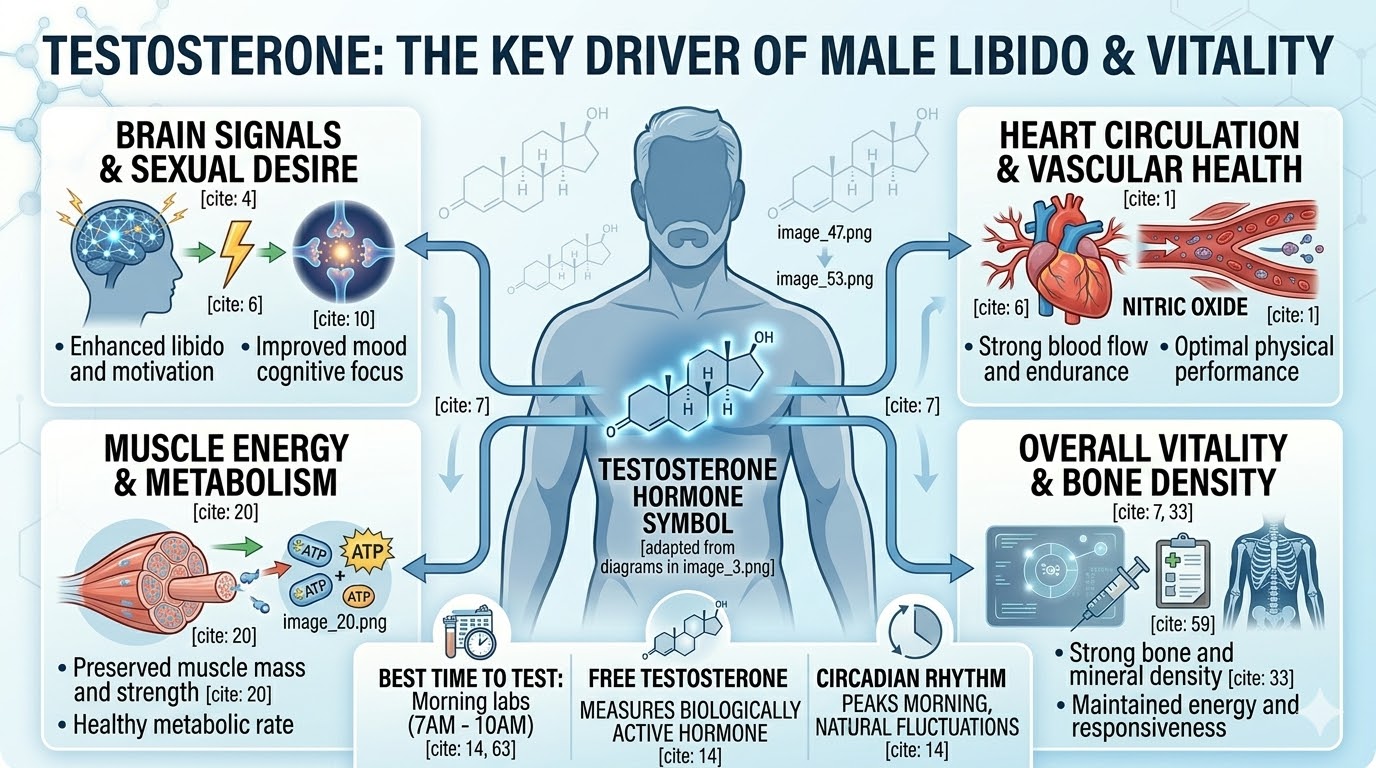
Testosterone acts on the brain and nervous system to regulate sexual desire.
It influences several biological mechanisms including:
- Sexual motivation and arousal in the brain
- Nitric oxide signaling that affects blood flow
- Mood and energy levels
- Muscle strength and confidence
- Overall metabolic health
When testosterone levels decline significantly, these systems can become less responsive, which may reduce libido.
You can learn more about testosterone’s broader role in the body in What Is Testosterone? Functions, Levels, and Why It Matters.
Testosterone vs Erectile Function
Many people assume libido and erectile function are the same thing, but they involve different biological mechanisms.
Libido
Libido refers to sexual desire or interest. It is influenced by:
- Testosterone levels
- Brain signaling
- Psychological factors
- Stress and sleep
Erectile Function
Erectile function primarily depends on blood flow and vascular health. Erections require healthy nitric oxide signaling and adequate circulation to penile tissues.
For more details on this difference, see Testosterone and Erectile Function: What’s Hormonal vs Vascular.
Signs Testosterone May Be Affecting Libido
Low testosterone can affect sexual desire in several ways.
Possible signs include:
- Reduced interest in sex
- Fewer spontaneous sexual thoughts
- Lower morning erections
- Reduced sexual satisfaction
- Fatigue during sexual activity
These symptoms often appear alongside other hormonal changes such as reduced energy, increased body fat, and decreased muscle mass.
You can explore these symptoms further in Low Testosterone Symptoms in Men: Physical, Mental, and Sexual Signs.
Stress and Libido
Chronic stress is one of the most common causes of libido decline. When stress levels increase, the body produces more cortisol. Elevated cortisol can suppress testosterone production and interfere with sexual desire.
Stress can also affect libido through:
- Poor sleep quality
- Increased anxiety
- Reduced mental focus
- Lower physical energy
You can learn more about this hormonal interaction in High Stress and Cortisol: How They Suppress Testosterone.
Sleep and Testosterone
Sleep plays a major role in hormone regulation. Testosterone production peaks during deep sleep stages. Poor sleep can reduce hormone production and negatively affect sexual desire.
Men who consistently sleep less than six hours per night often show lower testosterone levels. Improving sleep quality may help restore hormone balance and libido.
More details can be found in Sleep and Testosterone: How Deep Sleep Drives Hormone Production.
Body Fat, Metabolism, and Libido
Excess body fat can negatively affect testosterone levels and sexual health. Abdominal fat increases aromatase activity, an enzyme that converts testosterone into estrogen.
This hormonal shift can reduce testosterone availability and contribute to libido changes. Body composition also influences metabolic health and vascular function, both of which affect sexual performance.
You can learn more in Body Fat and Testosterone: Why Belly Fat Lowers T.
Age and Testosterone Changes
Testosterone levels naturally decline with age. After the age of 30, levels typically decrease by about 1 percent per year.
While this decline is gradual, some men may experience noticeable symptoms, including reduced libido. Lifestyle factors such as sleep, stress, diet, and exercise strongly influence how quickly these changes occur.
You can explore these changes in more detail in Testosterone After 40: What Changes and How to Adapt.
Lifestyle Strategies to Support Libido
Several lifestyle strategies can help maintain healthy testosterone levels and sexual desire.
- Maintain Healthy Body Composition: Reducing excess body fat may help improve hormone balance.
- Strength Training: Resistance training can support testosterone production and improve energy levels.
- Prioritize Sleep: Quality sleep supports hormone regulation and recovery.
- Manage Stress: Stress reduction techniques may help lower cortisol and support testosterone balance.
- Improve Cardiovascular Health: Healthy circulation is essential for sexual performance.
Can Supplements Help Libido?
Some men explore supplements designed to support testosterone production and sexual performance. Common ingredients include:
- Ashwagandha
- Tongkat Ali
- Fenugreek
- Zinc
- Magnesium
- Vitamin D
Evidence for these supplements varies, and they should be evaluated carefully. You can explore ingredient research and product comparisons in Best Testosterone Boosters: Reviews, Ingredients, and Buyer’s Guide.
Final Thoughts
Testosterone plays an important role in male libido, but it is only one part of a larger system involving blood flow, metabolic health, stress levels, and sleep quality.
Changes in sexual desire can occur for many reasons, and addressing lifestyle factors is often the most effective first step. By focusing on sleep, nutrition, exercise, stress management, and metabolic health, many men can maintain healthy libido and hormone balance well into midlife.
Frequently Asked Questions
Does testosterone affect libido?
Yes. Testosterone plays a central role in sexual desire. It influences brain signaling related to motivation and arousal, as well as energy levels and mood, all of which contribute to libido.
Can low testosterone cause low sex drive?
Low testosterone may reduce sexual desire in some men. Symptoms may include reduced interest in sex, fewer spontaneous sexual thoughts, and lower morning erections.
Does stress reduce libido?
Yes. Chronic stress raises cortisol levels, which can suppress testosterone production and interfere with sexual desire. Stress can also affect sleep quality and energy levels, further impacting libido.
Can lifestyle improve libido?
Healthy lifestyle habits can support both testosterone levels and sexual health. Regular exercise, quality sleep, stress management, and a balanced diet all contribute to better hormone balance and libido.
At what age does libido start to decline?
Libido varies widely between individuals, but testosterone levels typically begin to decline slowly after age 30. Lifestyle factors such as sleep, stress, metabolic health, and physical activity strongly influence how noticeable these changes are.
Related Articles
- Low Testosterone Symptoms in Men: Physical, Mental, and Sexual Signs
- High Stress and Cortisol: How They Suppress Testosterone
- Sleep and Testosterone: How Deep Sleep Drives Hormone Production
- Testosterone After 40: What Changes and How to Adapt
- Best Testosterone Boosters: Reviews, Ingredients, and Buyer’s Guide
Explore Natural Testosterone Support
Lifestyle habits, nutrition, and hormone balance all influence libido and performance. Explore our full testosterone health hub or review the most popular supplements designed to support hormone health.