






Part of our Testosterone Health Hub
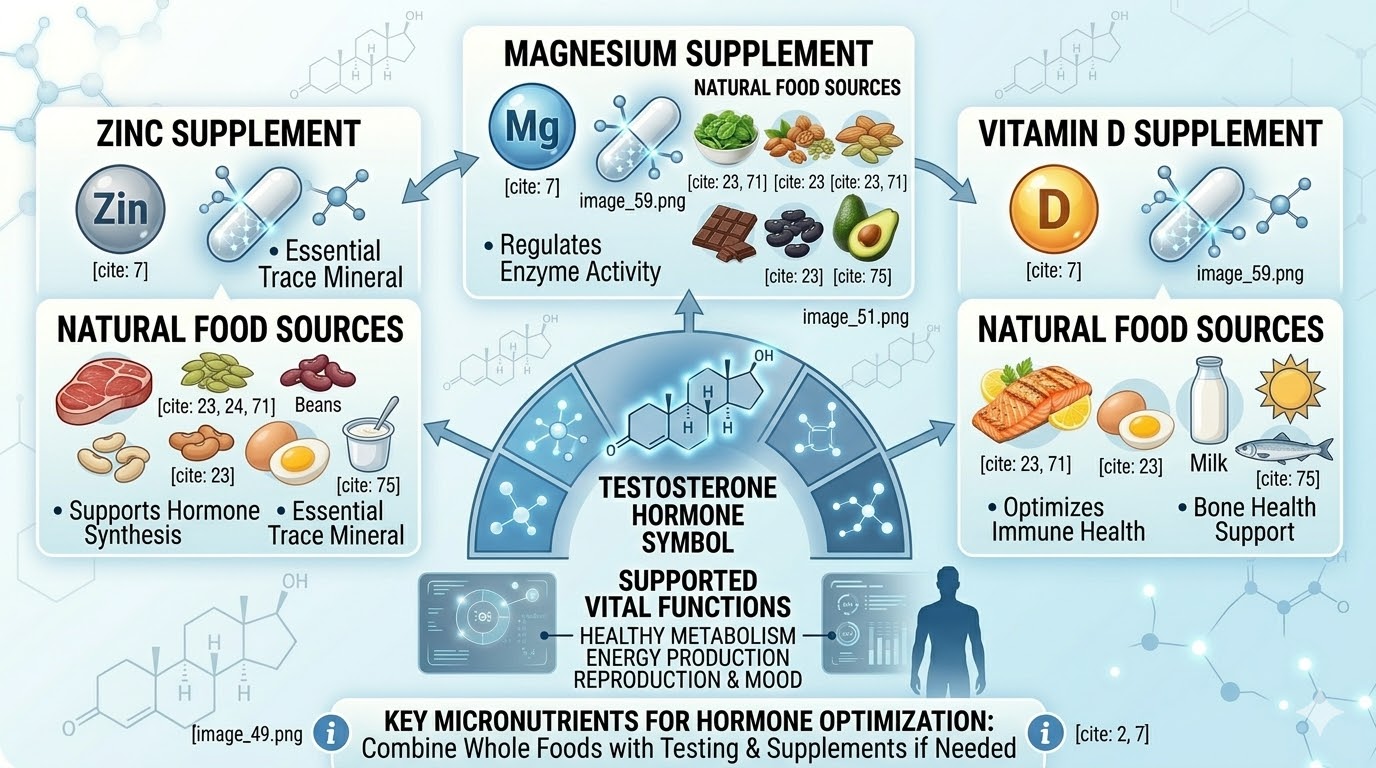
Micronutrients play an important role in hormone production, metabolic health, and overall physiological function. Among the most commonly discussed nutrients for testosterone support are zinc, magnesium, and vitamin D.
These nutrients participate in multiple biological processes that influence testosterone production, including enzyme activity, hormone signaling, sleep quality, and immune regulation.
However, understanding how these nutrients affect testosterone levels requires separating scientific evidence from marketing claims. While deficiencies can negatively affect hormone balance, supplementation does not automatically increase testosterone in men who already have adequate levels.
Why Micronutrients Matter for Hormone Production
Testosterone production depends on multiple biological systems working together.
Key systems involved include:
- The hypothalamus in the brain
- The pituitary gland, which releases signaling hormones
- The testes, where testosterone is produced
This regulatory network is known as the hypothalamic–pituitary–gonadal (HPG) axis.
Micronutrients support this system by contributing to:
- Enzyme activity involved in hormone synthesis
- Cellular energy production
- Immune regulation
- Stress response and recovery
When deficiencies occur, hormonal balance may be disrupted. For a broader explanation of testosterone regulation, see What Is Testosterone? Functions, Levels, and Why It Matters.
Zinc and Testosterone
Zinc is one of the most studied minerals in relation to testosterone production.
It plays several roles in hormone physiology, including:
- Supporting the enzymes involved in testosterone synthesis
- Maintaining reproductive health
- Supporting immune and metabolic function
Research suggests that zinc deficiency may contribute to lower testosterone levels, particularly in men with inadequate dietary intake. However, studies also indicate that zinc supplementation tends to improve testosterone levels primarily in individuals who are deficient.
Common dietary sources of zinc include:
- Red meat
- Shellfish (especially oysters)
- Pumpkin seeds
- Nuts and legumes
- Whole grains
Because zinc is lost through sweat, individuals who exercise heavily may have slightly higher zinc requirements.
Magnesium and Hormone Balance
Magnesium participates in over 300 biochemical reactions in the body.
Its functions include:
- Energy metabolism
- Muscle function
- Nervous system regulation
- Blood sugar control
Magnesium may influence testosterone levels indirectly through its effects on metabolic health and inflammation. Some research suggests magnesium may help support testosterone levels in men who are physically active or deficient in the mineral.
Magnesium also supports sleep quality, which is closely linked to testosterone production. You can explore this relationship in Sleep and Testosterone: How Deep Sleep Drives Hormone Production.
Dietary sources of magnesium include leafy green vegetables, nuts, seeds, whole grains, dark chocolate, and legumes.
Vitamin D and Testosterone
Vitamin D functions more like a hormone than a traditional vitamin.
It influences:
- Immune function
- Bone health
- Muscle function
- Hormone regulation
Several observational studies have found that men with higher vitamin D levels tend to have higher testosterone levels. Vitamin D receptors are also present in reproductive tissues, suggesting it may influence hormone signaling.
The primary source of vitamin D is sunlight exposure, although it can also be obtained through diet and supplements. Dietary sources include fatty fish such as salmon and sardines, egg yolks, and fortified dairy products. Because vitamin D deficiency is relatively common, supplementation may be beneficial for individuals with low levels.
The Role of Diet in Nutrient Intake
Many nutrients that support hormone balance can be obtained through a balanced diet.
A testosterone-supportive diet generally includes:
- Adequate protein intake
- Healthy fats
- Micronutrient-rich whole foods
- Stable blood sugar levels
More detailed guidance can be found in Best Diet for Testosterone: Protein, Healthy Fats, and Key Micronutrients.
Lifestyle Factors That Affect Nutrient Status
Several lifestyle factors influence micronutrient levels.
These include:
- Diet quality
- Alcohol consumption
- Sleep patterns
- Stress levels
- Exercise intensity
For example, chronic stress may influence nutrient utilization and hormone balance. Learn more in High Stress and Cortisol: How They Suppress Testosterone.
Can Supplements Improve Testosterone?
Supplementation with zinc, magnesium, or vitamin D may help correct deficiencies. However, research suggests that supplementation primarily benefits individuals with low nutrient levels rather than those who already meet recommended intake levels.
Many testosterone supplements combine these nutrients with herbal ingredients such as Ashwagandha, Fenugreek, and Tongkat Ali. You can explore supplement comparisons in Best Testosterone Boosters: Reviews, Ingredients, and Buyer’s Guide.
Signs of Possible Nutrient Deficiencies
Symptoms that may suggest low levels of key micronutrients include:
- Fatigue
- Reduced exercise performance
- Poor sleep quality
- Weakened immune function
- Muscle cramps or weakness
These symptoms can overlap with other health conditions, so proper testing and medical guidance may be helpful.
Final Thoughts
Zinc, magnesium, and vitamin D are important nutrients involved in many biological processes related to hormone health. Deficiencies in these nutrients may contribute to reduced testosterone levels and impaired metabolic function. However, supplementation is most effective when used to correct deficiencies rather than as a universal solution for increasing testosterone. Maintaining balanced nutrition, regular physical activity, and adequate sleep remains one of the most effective ways to support long-term hormonal health.
Frequently Asked Questions
Does zinc increase testosterone?
Zinc supplementation may improve testosterone levels in individuals who are deficient in zinc, but it does not necessarily increase testosterone in men who already have adequate levels.
Can magnesium boost testosterone?
Magnesium may support testosterone levels indirectly by improving sleep, reducing inflammation, and supporting metabolic health.
Is vitamin D linked to testosterone levels?
Some studies suggest that higher vitamin D levels are associated with higher testosterone levels, although the relationship is still being studied.
Should men take ZMA supplements?
ZMA supplements contain zinc, magnesium, and vitamin B6. They may be helpful for individuals with nutrient deficiencies but may not significantly increase testosterone in well-nourished individuals.
What foods naturally support testosterone production?
Foods rich in protein, healthy fats, zinc, magnesium, and vitamin D may support overall hormone balance.
Related Articles
- Best Diet for Testosterone: Protein, Healthy Fats, and Key Micronutrients
- Sleep and Testosterone: How Deep Sleep Drives Hormone Production
- High Stress and Cortisol: How They Suppress Testosterone
- Low Testosterone Symptoms in Men: Physical, Mental, and Sexual Signs
- Best Testosterone Boosters: Reviews, Ingredients, and Buyer’s Guide
Support Healthy Testosterone Levels
Nutrition, sleep, stress management, and exercise all influence hormone balance. Explore our full testosterone health hub or compare the most popular testosterone supplements.