





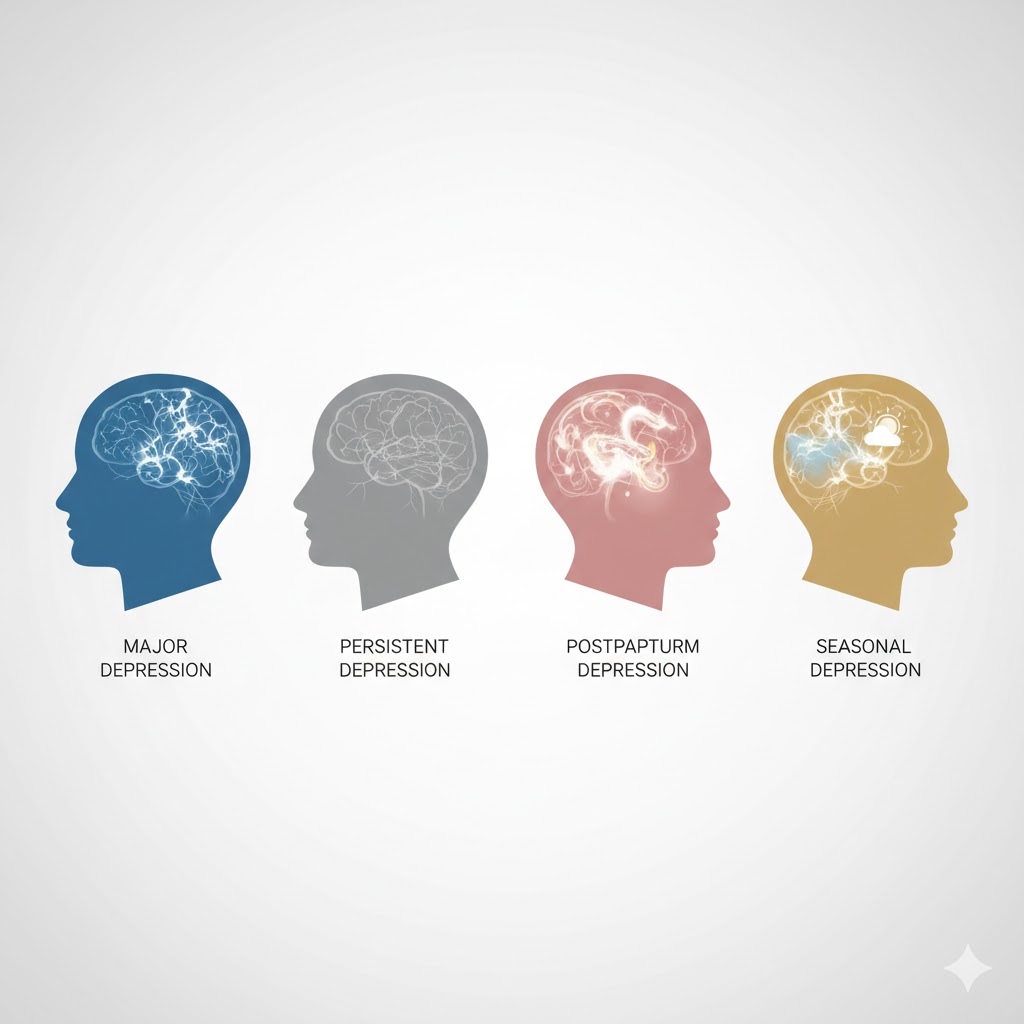
Depression is not a single condition. It exists on a spectrum of severity, duration, and symptom patterns. Understanding the different types of depression improves diagnosis accuracy, treatment selection, and recovery planning.
While symptoms may overlap, each subtype has unique characteristics and biological drivers.
If you are new to this topic, start with the main guide:
👉 Depression: Causes, Symptoms & Treatment
Major Depressive Disorder (MDD)
Major Depressive Disorder is the most recognized form of depression. It is characterized by:
- Persistent low mood
- Loss of interest or pleasure
- Sleep disturbance and appetite changes
- Fatigue and feelings of worthlessness
Symptoms must last at least two weeks and significantly impair functioning. MDD often involves dysregulation of serotonin, dopamine, and cortisol pathways.
👉 For deeper neurobiology, see: Brain Chemistry & Mood Regulation
Persistent Depressive Disorder (Dysthymia)
Persistent Depressive Disorder is a chronic, lower-grade depression lasting two years or longer. Symptoms may include:
- Ongoing low mood
- Low self-esteem
- Poor concentration
- Fatigue
Individuals may function daily but feel emotionally flat or unmotivated. Because symptoms are long-term, this form is sometimes overlooked.
High-Functioning Depression
High-Functioning Depression is not a formal DSM diagnosis but describes individuals who maintain work and social responsibilities and appear outwardly stable, while internally experiencing chronic low mood. This often overlaps with Persistent Depressive Disorder.
👉 Learn more: High-Functioning Depression
Postpartum Depression
Postpartum Depression occurs after childbirth and involves severe mood shifts, hopelessness, anxiety, and difficulty bonding. Hormonal shifts — particularly the rapid drop in estrogen and progesterone — contribute significantly. Postpartum depression is not the same as “baby blues.”
👉 Related: Postpartum Depression Guide
Seasonal Affective Disorder (SAD)
Seasonal Affective Disorder occurs in seasonal patterns, typically during winter months. Reduced sunlight exposure may disrupt circadian rhythm, lower serotonin production, and increase melatonin. This explains why light therapy can be effective.
👉 See also: Sleep & Mental Health Connection
Depression with Anxious Distress
Many individuals experience depression combined with significant anxiety symptoms. This may include:
- Restlessness
- Racing thoughts
- Heightened worry
- Sleep disruption
Overlap between depression and anxiety is extremely common.
👉 Anxiety Disorders Explained
Atypical Depression
Atypical Depression includes:
- Mood reactivity: Temporary improvement with positive events.
- Physical sensations: A “heavy limbs” sensation (leaden paralysis).
- Biological shifts: Increased appetite and excessive sleep.
It responds differently to certain medications compared to classic MDD.
Treatment Considerations by Type
Different types of depression may require different approaches:
- Seasonal depression: Light therapy + circadian regulation.
- Postpartum depression: Hormonal evaluation.
- Persistent depression: Long-term psychotherapy.
- Depression with anxiety: Combined anxiety treatment.
Natural and lifestyle strategies may support recovery in mild to moderate cases.
👉 Natural Mental Health Support
Why Classification Matters
Accurate classification improves treatment matching, reduces frustration, clarifies prognosis, and helps individuals feel understood. Depression is not one-size-fits-all.
Frequently Asked Questions
1. Is high-functioning depression real?
Yes, though it is not formally classified as a standalone diagnosis in the DSM-5.
2. Can depression last for years?
Yes, particularly Persistent Depressive Disorder, which by definition lasts at least two years.
3. Is postpartum depression hormonal?
Hormones play a significant role due to the rapid shift following birth.
4. Is seasonal depression caused by lack of sunlight?
Reduced light exposure affects the circadian rhythm and serotonin pathways.
5. Can someone have both anxiety and depression?
Yes, co-occurrence is very common.
6. Is atypical depression rare?
No, but it is less commonly discussed than “melancholic” depression.
7. Do different types require different medication?
Sometimes. A doctor may choose specific antidepressants based on the symptom profile.
8. Can therapy help all types?
Psychotherapy benefits almost most forms of depression.
9. Are supplements effective for all types?
They may support mild to moderate cases but should not replace clinical care.
10. Is diagnosis important?
Yes, proper classification guides the most effective treatment plan.
Understand Depression in Context
Depression exists on a spectrum. Explore related guides to understand anxiety overlap, sleep disruption, and natural recovery strategies.
Return to Depression: Causes, Symptoms & Treatment Anxiety Disorders Explained Natural Mental Health Support Mental Health Hub