
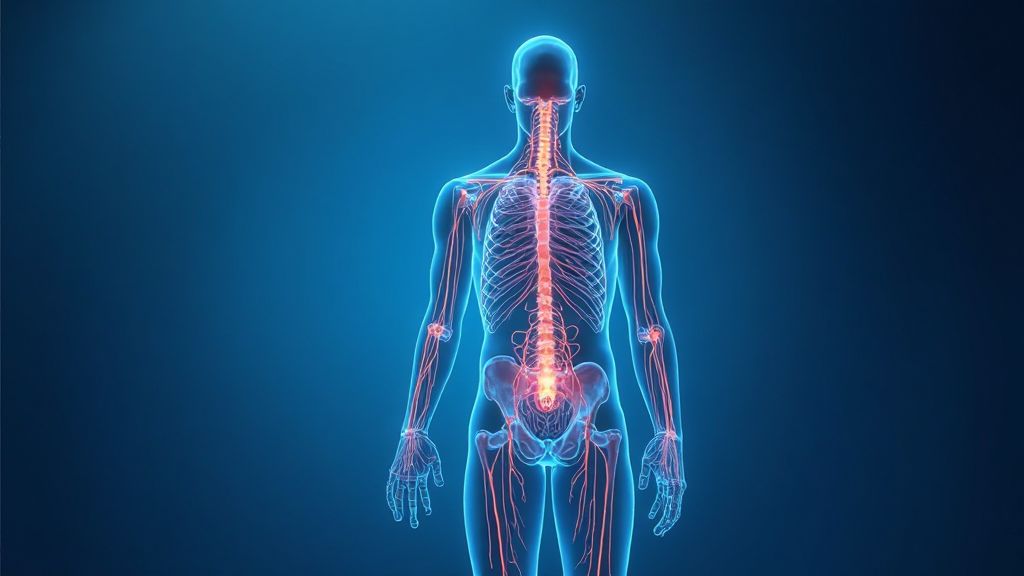
Your nervous system is the body’s communication network. Every movement, sensation, and automatic function – heartbeat, digestion, balance, and pain perception – depends on healthy nerves.
When nerves become damaged, inflamed, or dysfunctional, symptoms can range from mild tingling to chronic pain, numbness, weakness, or loss of coordination. These issues are increasingly common due to aging, metabolic conditions, nutrient deficiencies, and lifestyle stressors.
This Nerve Health Hub is your central guide to understanding:
- How nerves work
- Why nerve pain and neuropathy develop
- Natural and medical support strategies
- How to protect and support nerve function long term
What Is Nerve Health?
Nerve health refers to the ability of nerves to:
- Transmit signals accurately
- Maintain protective insulation (myelin)
- Receive adequate oxygen and nutrients
- Recover from minor injury or stress
Healthy nerves communicate smoothly. Damaged nerves misfire, slow down, or lose signal clarity—leading to pain, numbness, or dysfunction.
Common Signs of Nerve Problems
Nerve-related symptoms may include:
- Tingling or “pins and needles”
- Burning or electric pain
- Numbness or reduced sensation
- Muscle weakness
- Balance or coordination issues
- Sensitivity to touch
- Pain that worsens at night
These symptoms may appear gradually and are often dismissed early—allowing damage to progress silently.
Major Categories of Nerve Conditions
This hub organizes nerve health into five core pillars, each explored in depth on its own page.
🧠 Pillar 1: The Complete Guide to Nerve Health & Neuropathy
This pillar provides a foundational understanding of:
- How the nervous system works
- What neuropathy is
- Why nerve damage develops
- Early warning signs
👉 Read the full guide:
https://thehealthknowledgebase.com/nerve-health/complete-guide/
🦶 Pillar 2: Peripheral Neuropathy
Causes, Symptoms & Natural Relief
Peripheral neuropathy affects nerves outside the brain and spinal cord—most commonly in the feet and hands.
This pillar covers:
- What peripheral neuropathy is
- Early vs advanced symptoms
- Causes including diabetes, deficiencies, toxins, and aging
- Natural relief strategies
👉 Explore peripheral neuropathy:
https://thehealthknowledgebase.com/nerve-health/peripheral-neuropathy/
🔥 Pillar 3: Nerve Pain Management
Natural & Medical Options
Nerve pain behaves differently than muscle or joint pain. Standard painkillers often fail because nerve pain originates from signal dysfunction, not tissue injury.
This pillar explains:
- Why nerve pain feels burning or electric
- Natural strategies for calming nerves
- Medical treatment options
- How to combine approaches safely
👉 Learn about nerve pain management:
https://thehealthknowledgebase.com/nerve-health/nerve-pain-management/
🩸 Pillar 4: Diabetic Neuropathy & Blood Sugar–Related Nerve Damage
Blood sugar instability is one of the most common causes of nerve damage worldwide.
This pillar explores:
- How high blood sugar damages nerves
- Early diabetic nerve symptoms
- Prevention strategies
- Blood sugar–focused nerve support
👉 Read about diabetic neuropathy:
https://thehealthknowledgebase.com/nerve-health/diabetic-neuropathy/
🌱 Pillar 5: Nerve Repair & Regeneration
Some nerves can heal—others require stabilization and protection.
This pillar focuses on:
- Whether nerves can regenerate
- Nutrition and lifestyle factors
- Sleep, circulation, and recovery
- Creating the right environment for nerve repair
(Accessed through cluster articles within the hub)
Natural Support for Nerve Health
Many people seek natural nerve support alongside medical care.
Common supportive strategies include:
- Targeted nutrition and supplementation
- Blood sugar stability
- Gentle movement and circulation
- Stress reduction
- Sleep optimization
Supplement-based support is covered here:
https://thehealthknowledgebase.com/nerve-health/nerve-supplements/
When to Seek Medical Evaluation
Nerve symptoms should be medically evaluated if you experience:
- Rapid progression
- Muscle weakness
- Loss of coordination
- Autonomic symptoms (dizziness, digestion changes)
- Numbness with injury risk
Early evaluation can prevent long-term complications.
How to Use This Hub
You can:
- Start with the Complete Guide if you’re new (see below)
- Jump to a specific pillar based on symptoms
- Explore cluster articles for detailed guidance
- Use this hub as a reference point
Your Complete Nerve Health Resource Center
Explore our comprehensive guides on nerve pain, neuropathy, and natural strategies for long-term nerve health.
Comprehensive resources based on scientific research and clinical evidence

Medically Reviewed for Accuracy
This content has been reviewed for accuracy and clarity by The Health Knowledge Base Medical Review Team, using current research and evidence-based health guidance.
Our review process helps ensure that information related to health, wellness, nutrition, lifestyle strategies, and natural support topics reflects current scientific understanding and responsible editorial standards.
Written by The Health Knowledge Base Editorial Team
Our editorial team consists of health researchers, wellness writers, and content specialists focused on creating clear, practical, and research-informed health content.
We publish educational articles designed to help readers better understand health topics, explore natural wellness strategies, and make more informed lifestyle decisions with confidence.