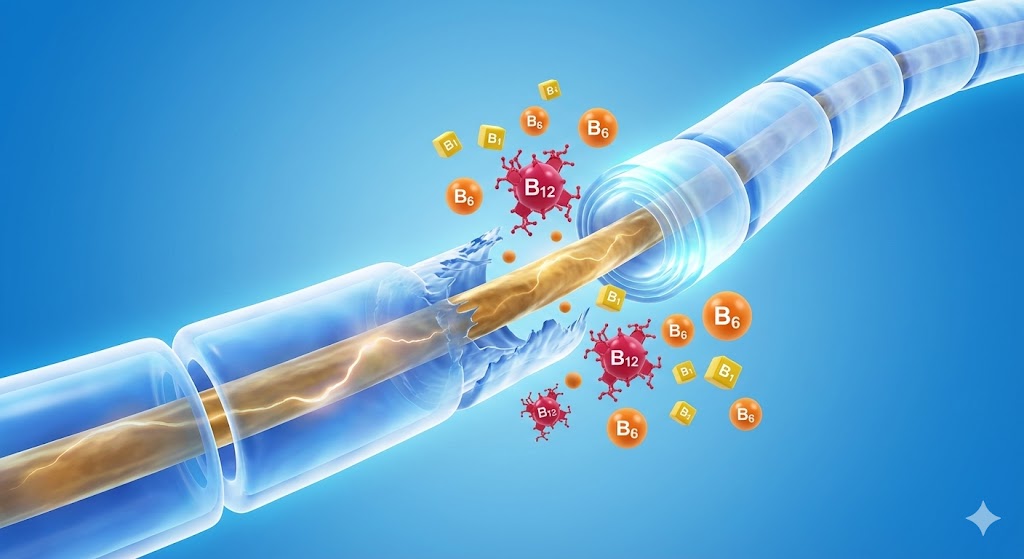







When nerves are damaged, pain is only part of the problem. Beneath the surface, nerve cells are often energy-depleted, inflamed, and struggling to regenerate. This is especially true in neuropathy related to aging, diabetes, or long-term metabolic stress.
Acetyl-L-carnitine (ALCAR) is one of the few supplements studied specifically for its ability to support nerve regeneration and nerve energy metabolism, not just symptom relief.
This article explains:
- What acetyl-L-carnitine is
- How it supports nerve damage recovery
- Who benefits most
- How to use it safely and effectively
For a complete framework, start at the
Nerve Health Hub (#1):
https://thehealthknowledgebase.com/nerve-health/
What Is Acetyl-L-Carnitine?
Acetyl-L-carnitine is a biologically active form of L-carnitine, a compound involved in energy production inside cells. The acetyl group allows ALCAR to:
- Cross cell membranes efficiently
- Enter nerve tissue readily
- Cross the blood–brain barrier
This makes it uniquely suited for neurological and peripheral nerve support.
ALCAR plays a central role in transporting fatty acids into mitochondria, where they are converted into ATP—the energy currency nerves rely on to transmit signals and repair themselves.
Why Energy Matters in Nerve Damage
Nerves are among the most energy-dependent cells in the body. When mitochondrial function declines, nerves:
- Fire less efficiently
- Lose signal clarity
- Regenerate more slowly
- Become more sensitive to pain
Energy failure is a common underlying factor in:
- Peripheral neuropathy
- Diabetic neuropathy
- Age-related nerve degeneration
This broader condition is covered here:
Peripheral Neuropathy: Causes, Symptoms & Natural Relief (#4)
https://thehealthknowledgebase.com/nerve-health/peripheral-neuropathy/
How Acetyl-L-Carnitine Supports Nerve Recovery
1) Improves Mitochondrial Energy Production
ALCAR helps shuttle fatty acids into mitochondria, allowing nerve cells to:
- Produce ATP efficiently
- Sustain signal transmission
- Support repair processes
Without sufficient energy, nerves cannot regenerate—even if vitamins are present.
2) Supports Nerve Regeneration Signaling
Research suggests ALCAR may support:
- Axonal regrowth
- Nerve fiber density
- Recovery of damaged nerve endings
This makes it particularly relevant in nerve damage recovery, not just pain management.
For regeneration mechanisms, see:
Can Nerves Heal Themselves? (#32)
https://thehealthknowledgebase.com/nerve-health/nerve-repair/can-nerves-heal/
3) Helps Reduce Neuropathic Pain
ALCAR may help reduce:
- Burning pain
- Shooting sensations
- Sensory disturbances
Importantly, it does this by improving nerve function—not by blocking pain signals.
This differentiates it from conventional pain medications discussed in:
Nerve Pain Management: Natural & Medical Options (#5)
https://thehealthknowledgebase.com/nerve-health/nerve-pain-management/
4) Supports Cognitive and Central Nervous System Health
Because ALCAR crosses the blood–brain barrier, it may also support:
- Cognitive clarity
- Mental energy
- Central nervous system resilience
This is an added benefit for older adults experiencing both nerve and cognitive fatigue.
Evidence for Acetyl-L-Carnitine in Neuropathy
Clinical research has examined ALCAR in various neuropathy contexts, including diabetic and chemotherapy-related nerve damage.
Observed benefits include:
- Improved nerve conduction velocity
- Reduced pain scores
- Increased nerve fiber regeneration markers
Results are most noticeable with consistent use over several weeks.
For expected timelines, see:
How Long Do Nerve Supplements Take to Work? (#15)
https://thehealthknowledgebase.com/nerve-health/nerve-supplements/how-long-to-work/
Who Benefits Most from Acetyl-L-Carnitine?
ALCAR is particularly useful for:
- Peripheral neuropathy with energy-related fatigue
- Diabetic or metabolic neuropathy
- Age-related nerve decline
- Nerve damage following illness or medication
Older adults often benefit from tailored approaches discussed in:
Best Nerve Supplements for Seniors (#16)
https://thehealthknowledgebase.com/nerve-health/nerve-supplements/best-for-seniors/
Acetyl-L-Carnitine vs Other Nerve Supplements
Each nerve supplement targets a different mechanism:
- B Vitamins (#10) → myelin, neurotransmitters, repair foundations
https://thehealthknowledgebase.com/nerve-health/nerve-supplements/b-vitamins-neuropathy/ - Alpha-Lipoic Acid (#9) → oxidative stress & metabolic protection
https://thehealthknowledgebase.com/nerve-health/nerve-supplements/alpha-lipoic-acid/ - Magnesium (#11) → nerve excitability & muscle relaxation
https://thehealthknowledgebase.com/nerve-health/nerve-supplements/magnesium-for-nerve-pain/ - Acetyl-L-Carnitine → mitochondrial energy & regeneration signaling
This is why ALCAR is often included in comprehensive formulas reviewed in the
Best Nerve Supplements pillar (#3):
https://thehealthknowledgebase.com/nerve-health/nerve-supplements/
Dosage Guidance (General, Non-Prescriptive)
ALCAR dosing is individualized, but many protocols use:
- Divided daily dosing
- Gradual titration based on tolerance
- Consistent daily use rather than sporadic intake
Because ALCAR is stimulating for some people, earlier-day dosing may be preferable.
How Long Does Acetyl-L-Carnitine Take to Work?
Typical response patterns:
- 2–4 weeks: improved energy and reduced nerve fatigue
- 4–8 weeks: reduced neuropathic pain and sensory issues
- 8–12+ weeks: stabilization and regeneration support
Consistency is critical.
Safety, Side Effects, and Interactions
Acetyl-L-carnitine is generally well tolerated.
Possible side effects:
- Mild nausea
- Restlessness if taken late in the day
- Headache (rare)
Use caution if:
- You have thyroid conditions
- You are sensitive to stimulating supplements
For broader safety considerations, see:
Are Nerve Supplements Safe? Side Effects & Interactions (#14)
https://thehealthknowledgebase.com/nerve-health/nerve-supplements/safety-side-effects/
✅ FAQs
- What is acetyl-L-carnitine used for?
It supports nerve energy production and regeneration. - Can acetyl-L-carnitine help neuropathy?
It may improve nerve function and reduce pain over time. - Is acetyl-L-carnitine good for nerve damage?
Yes, especially when energy depletion is involved. - How long does it take to work?
Often 4–8 weeks with consistent use. - Can acetyl-L-carnitine repair nerves?
It supports regeneration conditions but does not guarantee full repair. - Is acetyl-L-carnitine safe long term?
Generally yes, when used appropriately. - Can it be taken with B vitamins?
Yes, they complement each other well. - Does acetyl-L-carnitine increase energy?
Yes, which is why earlier-day dosing is often preferred. - Is it good for seniors?
Often yes, under appropriate guidance. - Should it be combined with lifestyle changes?
Yes, circulation and metabolic health amplify results.
Support Nerve Repair with the Right Nutrients
Learn which vitamins and supplements support nerve regeneration and how to choose safely.

Over 31,443 people have already used this unknown coffee trick to restore their nerve health.
See why doctors are stunned by the amazing results.
Tap Image above to View Video!