Stay Informed With Trusted Health Insights
Join 5,000+ readers who receive evidence-informed health articles, wellness tips, supplement reviews, and practical health guides delivered straight to their inbox.
Get Free Health UpdatesNo spam. Just helpful health education, updates, and resources.
How creatine works can be explained clearly by looking at how it supports cellular energy, especially in muscle and brain, and how this drives performance and growth.[1][2]
What Creatine Is
Creatine is a nitrogen-containing compound made in the liver, kidneys, and pancreas from the amino acids arginine, glycine, and methionine. It is stored mostly in skeletal muscle as free creatine and phosphocreatine, with smaller amounts in the brain and other tissues.[2]
- About two thirds of intramuscular creatine exists as phosphocreatine, a high‑energy phosphate store.[2]
- The body also obtains creatine through diet, mainly from meat and fish, while vegetarians rely more on endogenous synthesis.[2]
The Phosphocreatine–ATP Energy System
During short, intense efforts like sprints or heavy lifts, muscles rely heavily on ATP, which is rapidly depleted. Phosphocreatine donates a phosphate group to ADP to regenerate ATP via the creatine kinase reaction, sustaining high power output for a few more seconds.[3]
- This system dominates energy supply in efforts lasting roughly 0–10 seconds, such as maximal lifts or short sprints.[4]
- By increasing muscle phosphocreatine stores, supplementation allows faster ATP resynthesis and better performance in repeated high‑intensity bouts.[4]
Read more: Creatine and Athletic Performance
Creatine and Cell Hydration
Creatine is osmotically active: when stored in muscle cells, it draws water into the cell, increasing intracellular hydration. This cell volumization is a signal that can turn on anabolic pathways and support protein synthesis.[4]
- Increased cell volume is associated with activation of pathways such as mTOR, which promotes muscle growth.[5]
- The result is not simply “water weight,” but a more hydrated, metabolically active muscle fiber.[4]
Read more: Creatine and Muscle Growth
Molecular Signaling and Muscle Growth
Beyond energy and hydration, creatine influences signaling networks involved in hypertrophy and recovery.[5]
- Creatine can enhance IGF‑1 signaling and mTOR activity, improving the balance toward muscle protein synthesis over breakdown when combined with resistance training.[5]
- Studies show greater gains in lean mass and strength in creatine users versus placebo when training volumes and programs are matched.[4]
These mechanisms explain why creatine is widely recommended for strength and physique athletes.[4]
Effects on the Brain and “Muscle–Brain Axis”
The brain also uses creatine to buffer ATP, especially during periods of sleep loss, mental stress, or high cognitive demand. Supplementation can increase brain phosphocreatine and improve performance in memory and reaction‑time tasks in some populations.[6][7]
- Research now describes a “muscle–brain axis,” where improved muscular energy and systemic metabolism may indirectly support brain health.[6]
- Higher doses are being explored in conditions such as neurodegenerative disease and depression.[7]
Read more: Creatine and Cognition
Creatine Turnover and the Need for Supplementation
The body loses about 1–2 g of creatine per day through non‑enzymatic conversion to creatinine, excreted in urine. This loss must be replaced by diet or endogenous synthesis to maintain optimal tissue stores.[2]
- Supplementation with 3–5 g/day of creatine monohydrate saturates muscle stores and offsets daily loss.[1]
- Individuals with low dietary intake (e.g., vegetarians) or high training loads often see the biggest performance benefits.[4]
Read more: How to Take Creatine – Loading, Cycling & Maintenance
Is Creatine Safe?
Creatine monohydrate is one of the most extensively studied sports supplements and is considered safe for healthy individuals when used at recommended doses. Long‑term studies show no harmful effects on kidney or liver function in people without pre‑existing disease.[8][1]
Read more: Is Creatine Safe? Busting Myths and Facts
Frequently Asked Questions (FAQs)
1. How long does it take creatine to start working?
Most people notice performance improvements within 1–4 weeks as muscle stores saturate, depending on whether a loading phase is used. Read More[4]
2. Do I need a loading phase for creatine to work?
No. A loading phase fills stores more quickly, but daily intake of 3–5 g will reach the same levels over a few weeks. Read More[1]
3. Why do some people gain weight on creatine?
Early weight gain usually reflects increased water inside muscles, not fat; over time, extra lean mass from better training can also add weight. Read More[4]
4. Does creatine work if I don’t lift weights?
Creatine’s main benefits appear when combined with high‑intensity or resistance training; without training, effects on performance or muscle size are much smaller. Read More[4]
5. Is creatine helpful for endurance athletes?
Creatine can support repeated sprints and high‑intensity surges within endurance events, but it may increase body mass slightly, which can be a trade‑off in weight‑sensitive sports. Read More[9]
6. How does creatine affect older adults?
Older adults using creatine alongside resistance training often see improved strength, lean mass, and functional performance. Read More[4]
7. Can I take creatine with caffeine or pre‑workout?
Current evidence does not show a consistent negative interaction; many users combine them without issues, but individual tolerance varies. Read More[10]
8. Does creatine help recovery between workouts?
By restoring phosphocreatine and supporting cell signaling, creatine can reduce fatigue and markers of muscle damage after intense sessions. Read More[4]
9. Is micronized creatine different from regular monohydrate?
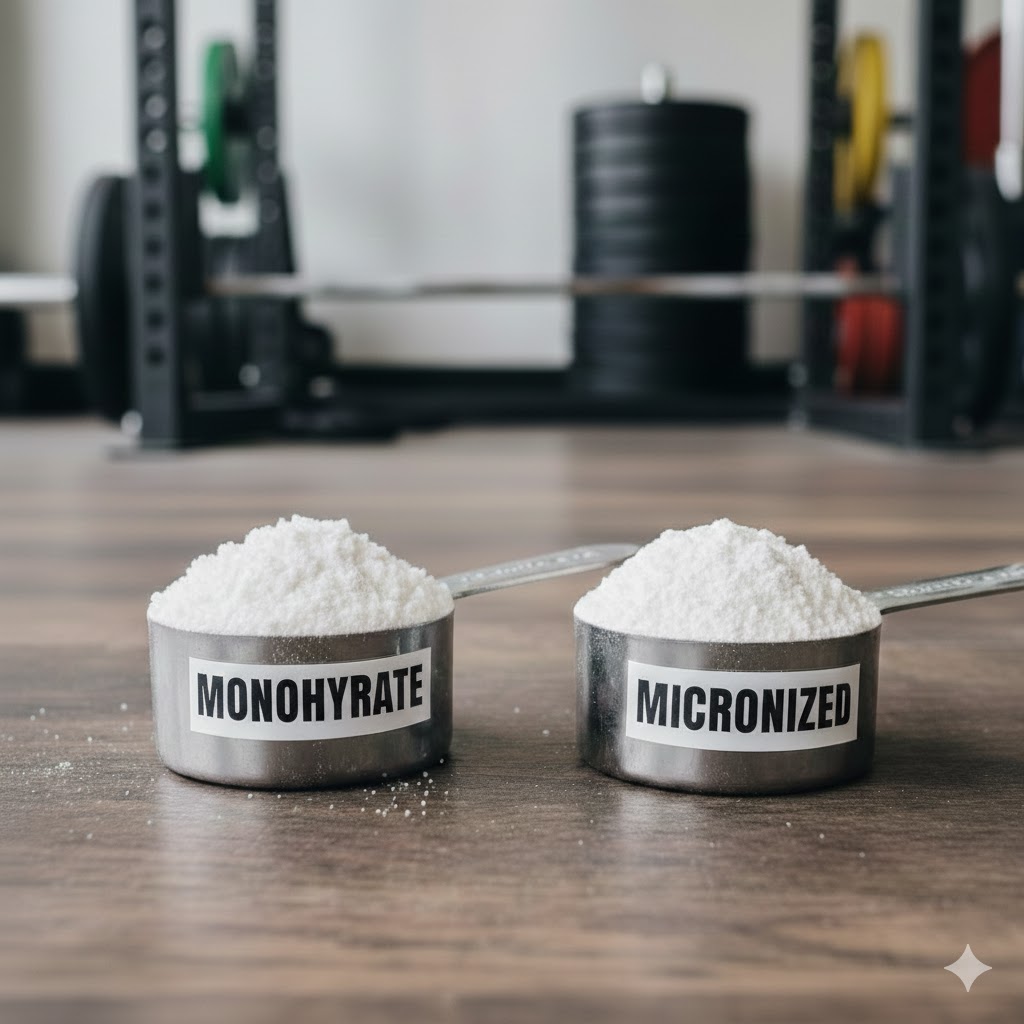
Micronized creatine is monohydrate ground into smaller particles for improved mixability; its mechanisms and effects are essentially the same. Read More [11]
10. What is the best time of day to take creatine?
Timing is flexible, but many prefer around training or with a carb‑containing meal to support uptake and consistency. Read More [12]
Related Articles
- The Ultimate Guide to Creatine: Benefits, Usage, and Best Products
- Creatine and Muscle Growth: How It Works
- Creatine Myths vs. Facts: What You Need to Know
Power Your Cellular Energy System
Now that you understand how creatine enhances ATP production and cellular energy, experience optimal phosphocreatine storage with Creatine Ultimate CRN-5.
Boost Cellular Energy
References
- Kreider RB, Kalman DS, Antonio J, et al. International Society of Sports Nutrition position stand: safety and efficacy of creatine supplementation in exercise, sport, and medicine. J Int Soc Sports Nutr. 2017;14:18.
- Persky AM, Brazeau GA. Clinical pharmacology of the dietary supplement creatine monohydrate. Pharmacol Rev. 2001;53(2):161–176.
- Greenhaff PL. The nutritional biochemistry of creatine. Br J Sports Med. 1997;31(2):112–119.
- Kreider RB. Creatine supplementation and exercise performance. Sports Med. 2003;33(3):155–168.
- Sun M, et al. The regulating pathway of creatine on muscular protein synthesis via mTOR/P70S6K signaling. Am J Physiol Cell Physiol. 2022;322(1):C1–C12.
- Ribeiro F, et al. Creatine supplementation and the muscle–brain axis in health and disease. Front Nutr. 2025;12:1579204.
- Gordji‑Nejad A, et al. Single‑dose creatine improves cognitive performance and high‑energy phosphates in the human brain. Sci Rep. 2024;14:12345.
- Gualano B, Rawson ES, Candow DG, et al. Creatine supplementation is safe, beneficial throughout the lifespan, and may promote health and longevity. Front Nutr. 2025;8:1578564.
- Forbes SC, Candow DG, et al. Creatine supplementation and endurance performance: a review. J Am Coll Nutr. 2023;42(8):729–742.
- Bonilla DA, et al. Creatine supplementation in exercise and clinical settings: common questions and misconceptions. J Int Soc Sports Nutr. 2021;18(1):13.
- Ostojic SM. Creatine as a food supplement for the general population. J Funct Foods. 2021;83:104569.
- Antonio J, et al. Timing of creatine ingestion: does it matter? Nutrients. 2021;13(2):531.

Medically Reviewed for Accuracy
This content has been reviewed for accuracy and clarity by The Health Knowledge Base Medical Review Team, using current research and evidence-based health guidance.
Our review process helps ensure that information related to health, wellness, nutrition, lifestyle strategies, and natural support topics reflects current scientific understanding and responsible editorial standards.
Written by The Health Knowledge Base Editorial Team
Our editorial team consists of health researchers, wellness writers, and content specialists focused on creating clear, practical, and research-informed health content.
We publish educational articles designed to help readers better understand health topics, explore natural wellness strategies, and make more informed lifestyle decisions with confidence.
Affiliate Transparency, Medical Disclaimer & Safety Notice
At The Health Knowledge Base, we take pride in being a trusted resource and affiliate partner with select, high-quality companies. We choose these partnerships carefully because we genuinely believe their products, services, and educational resources align with the values and mission of our website.
When you purchase through certain links on this site, we may receive a small commission or compensation. This helps support our research, content creation, and ongoing work at no additional cost to you. Your price remains exactly the same.
Medical Disclaimer
The information provided by The Health Knowledge Base is for general informational and educational purposes only and is not a substitute for professional medical advice, diagnosis, or treatment.
Always seek the advice of your physician, doctor, or another qualified healthcare provider with any questions you may have regarding a medical condition, symptoms, treatment options, diet changes, exercise programs, or supplements.
Never disregard professional medical advice or delay in seeking it because of something you have read on this website.
Critical Safety Notice
Before making any changes to your diet, starting a new fitness or wellness routine, or taking any supplements mentioned on this site, you should consult with your doctor, physician, or another qualified healthcare professional. Reliance on any information provided by The Health Knowledge Base is solely at your own risk.
View our Affiliate Disclosure → | View our Medical Disclaimer →