

So you’ve decided to support your respiratory health with a lung detox diet or natural cleansing methods. The first question that comes to mind is: “How long until I see results?”
The answer isn’t simple because it depends on your unique situation. A 20-year smoker will have a different timeline than someone clearing seasonal allergies. But with the right expectations, you can stay motivated and committed to the process.
This guide provides a realistic timeline for lung detoxification, broken down by different starting points and goals. You’ll learn what to expect week-by-week and how to track your progress effectively.
The 3 Factors That Determine Your Detox Timeline
1. Your Starting Point
- Former smokers: 6 months to 2+ years for full regeneration of cilia
- Current smokers/vapers: Ongoing process while you continue exposure
- Environmental toxin exposure (pollution, mold): 1-3 months with avoidance
- General maintenance for healthy lungs: 1-4 weeks
2. Your Commitment Level
- Intensive program (diet, herbs, breathing, sauna): Faster results (weeks)
- Moderate approach (diet changes + some supplements): Steady progress (months)
- Minimal effort (just adding one supplement): Slow, gradual improvement
3. Your Body’s Unique Response
- Age: Younger bodies typically regenerate faster
- Genetics: Some people naturally detoxify more efficiently
- Overall health: Liver and kidney function impact toxin elimination
- Nutritional status: Adequate vitamins/minerals support repair
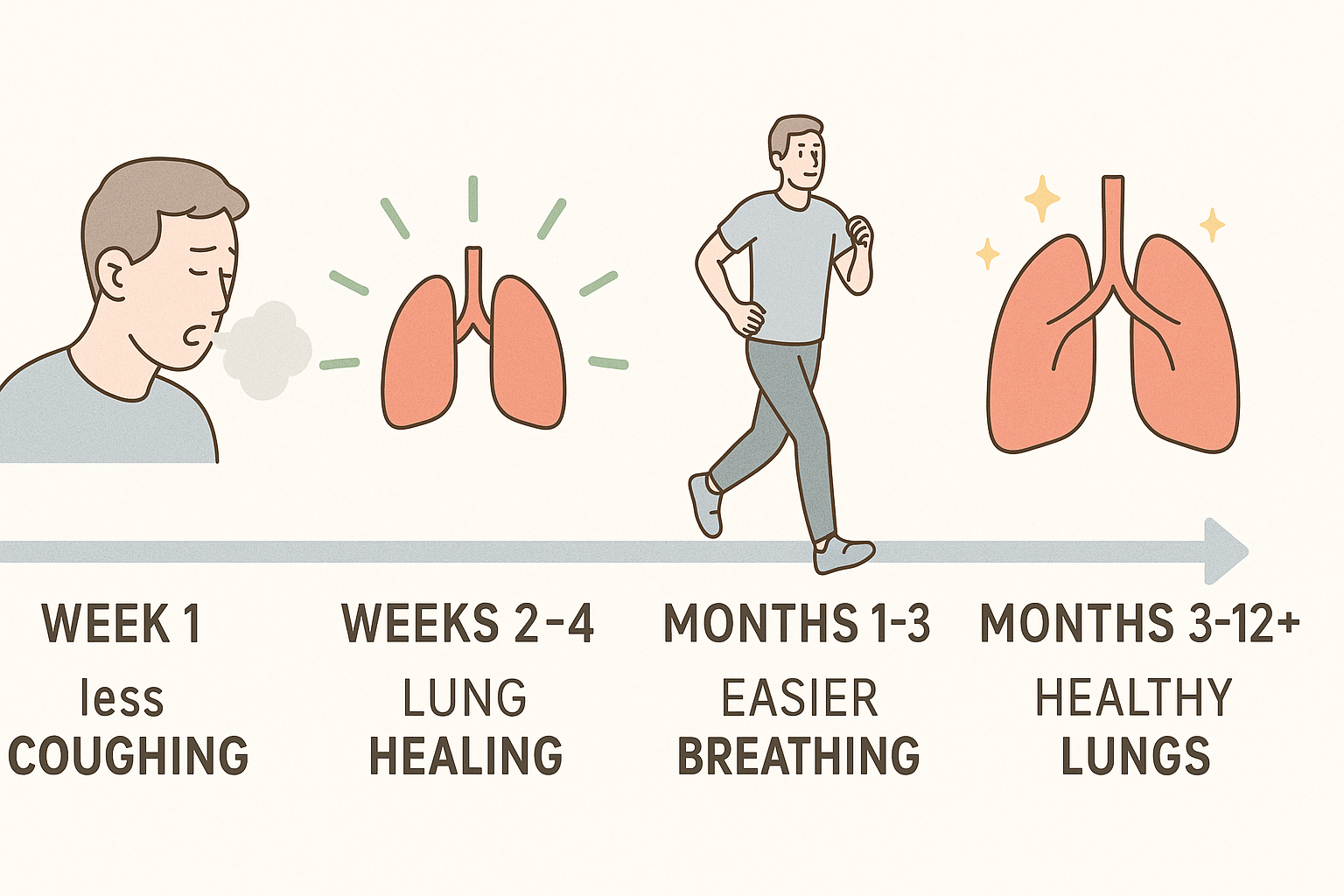
The Realistic Week-by-Week Timeline
Week 1: The Cleansing Reaction Phase
What to expect: Increased mucus production, coughing, possible fatigue
Why it happens: Your body is mobilizing stored toxins and debris
Key activities:
- Begin your 7-day detox checklist
- Stay hydrated with plenty of water and herbal teas
- Expect to see changes in mucus color and consistency
Progress markers:
- More productive coughing (bringing up mucus)
- Possible mild detox symptoms (headache, fatigue)
- Initial clearing of sinus and upper respiratory tract
Weeks 2-4: The Repair & Regeneration Phase
What to expect: Reduced coughing, easier breathing, more energy
Why it happens: Inflammation decreases, cilia begin repairing
Key activities:
- Continue anti-inflammatory foods and herbs
- Incorporate breathing exercises
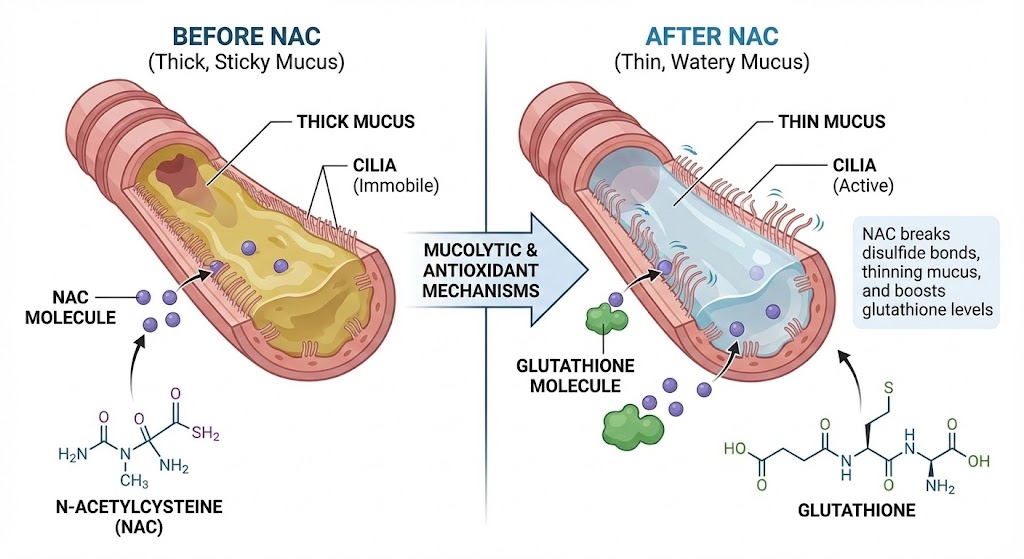
- Consider adding targeted supplements like NAC
Progress markers:
- Deeper, easier breaths
- Less frequent coughing
- Improved morning breathing
- Increased stamina during activity
Months 1-3: The Deep Healing Phase
What to expect: Noticeable improvements in lung function and capacity
Why it happens: Cellular repair continues, lung tissue regenerates
Key activities:
- Maintain healthy lung habits
- Regular exercise to strengthen respiratory muscles
- Ongoing avoidance of toxins and irritants
Progress markers:
- Measurable improvement in breathing tests
- Ability to exercise without breathlessness
- Reduced frequency of respiratory infections
- Better sleep quality
Months 3-12+: The Full Regeneration Phase
What to expect: Near-complete healing for most non-smokers, significant improvement for former smokers
Why it happens: Complete cellular turnover and tissue regeneration
Key activities:
- Lifestyle maintenance
- Regular check-ins on lung health
- Continued support for respiratory system
Progress markers for former smokers:
- Cilia regeneration (6-9 months)
- Reduced lung cancer risk (5+ years)
- Improved lung function tests (continues for years)
Special Timelines for Different Situations
After Quitting Smoking
- 24 hours: Carbon monoxide levels normal, oxygen improves
- 2 weeks – 3 months: Circulation improves, lung function increases up to 30%
- 1-9 months: Cilia regrow, clearing mucus, reducing infection risk
- 1 year: Coronary heart disease risk cut in half
- 5-15 years: Stroke risk returns to non-smoker level
For Asthma Management
- 2-4 weeks: Reduced inflammation, decreased rescue inhaler use
- 1-3 months: Improved lung function measurements
- 3-6 months: Reduced frequency and severity of attacks
For COPD Support
- Immediate: Symptom relief with proper COPD management
- 1-3 months: Reduced exacerbations, improved quality of life
- Ongoing: Slowed progression, preserved remaining lung function
For General Maintenance
- 1-4 weeks: Clearer breathing, reduced congestion
- 1-3 months: Improved immunity against respiratory infections
- Ongoing: Better overall respiratory health and function
How to Track Your Progress (Not Just Guess)
Objective Measures:
- Breathing tests: Track your peak flow or FEV1 if you have a home spirometer
- Oxygen levels: Monitor SpO2 with a pulse oximeter (especially during exercise)
- Activity tolerance: Note how far you can walk/run without breathlessness
- Symptom diary: Track cough frequency, mucus production, chest tightness
Subjective Measures:
- Morning breathing: How do your lungs feel first thing in the morning?
- Energy levels: Do you have more stamina throughout the day?
- Sleep quality: Are you sleeping through the night without coughing?
- Sense of smell/taste: Have these improved?
The Biggest Mistake: Expecting Overnight Results
Lung tissue takes time to heal. The alveoli (air sacs) that exchange oxygen have been compared to delicate grape clusters—they repair slowly but surely.
Realistic expectations:
- First improvements: Days to weeks (symptom relief)
- Noticeable changes: Weeks to months (function improvement)
- Significant healing: Months to years (tissue regeneration)
When to Adjust Your Approach
If you’re not seeing ANY improvement after 4-6 weeks:
- Reevaluate your program’s intensity
- Consider additional support like targeted supplements
- Consult with a healthcare provider
- Check for underlying issues like silent reflux or allergies
If symptoms worsen:
- Slow down—your body may be releasing toxins too quickly
- Increase hydration and rest
- Review our guide on lung detox symptoms to distinguish healing from problems
Maintenance: The Never-Ending Part of Lung Health
Detox isn’t a one-time event—it’s the beginning of ongoing lung care.
Daily habits for lifelong lung health:
- Stay hydrated
- Eat antioxidant-rich foods
- Practice deep breathing
- Avoid pollutants and irritants
- Exercise regularly
- Get quality sleep
Conclusion: Patience Leads to Lasting Results
Your lungs didn’t accumulate toxins overnight, and they won’t heal overnight either. But with consistent effort and realistic expectations, you can make significant improvements to your respiratory health.
Remember:
- Week 1 is about starting and surviving the initial cleanse
- Month 1 is about establishing new habits and noticing early benefits
- Months 3-6 bring measurable improvements in function
- Year 1 and beyond offer deeper healing and regeneration
Whether you’re recovering from smoking, managing a chronic condition, or simply optimizing your health, the timeline is your roadmap. Follow it patiently, celebrate small victories, and trust that each day of clean living brings you closer to the deep, easy breathing you deserve.
Your journey to better lung health is a marathon, not a sprint. But every step forward—every day of clean air, healthy food, and conscious breathing—brings you closer to your goal of optimal respiratory function and vitality.
FAQs
1. How long does it take to clean your lungs after quitting smoking?
Initial clearing begins within 24 hours as carbon monoxide leaves your system. Significant mucus clearance happens over 2-12 weeks as cilia regrow. Full tissue regeneration and cancer risk reduction take 1-15 years depending on how long and how much you smoked.
2. Can you speed up lung detoxification?
Yes, to some extent. Intensive approaches combining lung detox supplements, anti-inflammatory diet, hydration, exercise, sauna therapy, and breathing exercises can accelerate the process compared to passive approaches.
3. How do I know if my lung detox is working?
Signs include: increased then decreased mucus production, easier breathing, improved exercise tolerance, better sleep, reduced coughing, and improved results on breathing tests or pulse oximeter readings during activity.
4. What’s the shortest effective lung detox?
A focused 7-10 day program can initiate cleansing and provide noticeable symptom relief for mild congestion or recent exposure. However, meaningful tissue repair and regeneration require consistent effort over months.
5. How long should a lung detox last for heavy smokers?
Former heavy smokers should think in terms of years rather than weeks or months. While initial improvements come quickly, complete regeneration of lung tissue and reduction of cancer risk is a 5-15 year process of continuous healing.
6. Can you do lung detoxes too frequently?
Yes. Constant aggressive detoxing can stress the body. After an intensive 1-4 week program, transition to maintenance mode with healthy habits. Consider seasonal (2-4 times per year) intensive cleanses if needed, with gentle daily support in between.
7. What’s the most important factor in lung detox timeline?
Removing the source of toxins. If you continue smoking, vaping, or living in a polluted environment while trying to detox, you’re fighting a losing battle. Elimination of exposure must come first for any detox to be truly effective.
8. How long until I stop coughing during a lung detox?
Initial increase in productive coughing typically lasts 1-3 weeks as stored mucus is expelled. If dry, irritating cough persists beyond this, it may indicate a different issue that needs addressing.
9. Do lung detox results last forever?
Only if you maintain healthy habits. Without ongoing avoidance of toxins and support for respiratory health, your lungs will gradually reaccumulate damage. Think of detox as resetting your system, then maintenance as keeping it clean.
10. When should I see a doctor instead of doing a lung detox?
If you experience: severe shortness of breath, chest pain, coughing up blood, high fever, or sudden worsening of symptoms. Also consult a doctor if you have a diagnosed lung condition like COPD or severe asthma before starting any detox program.