






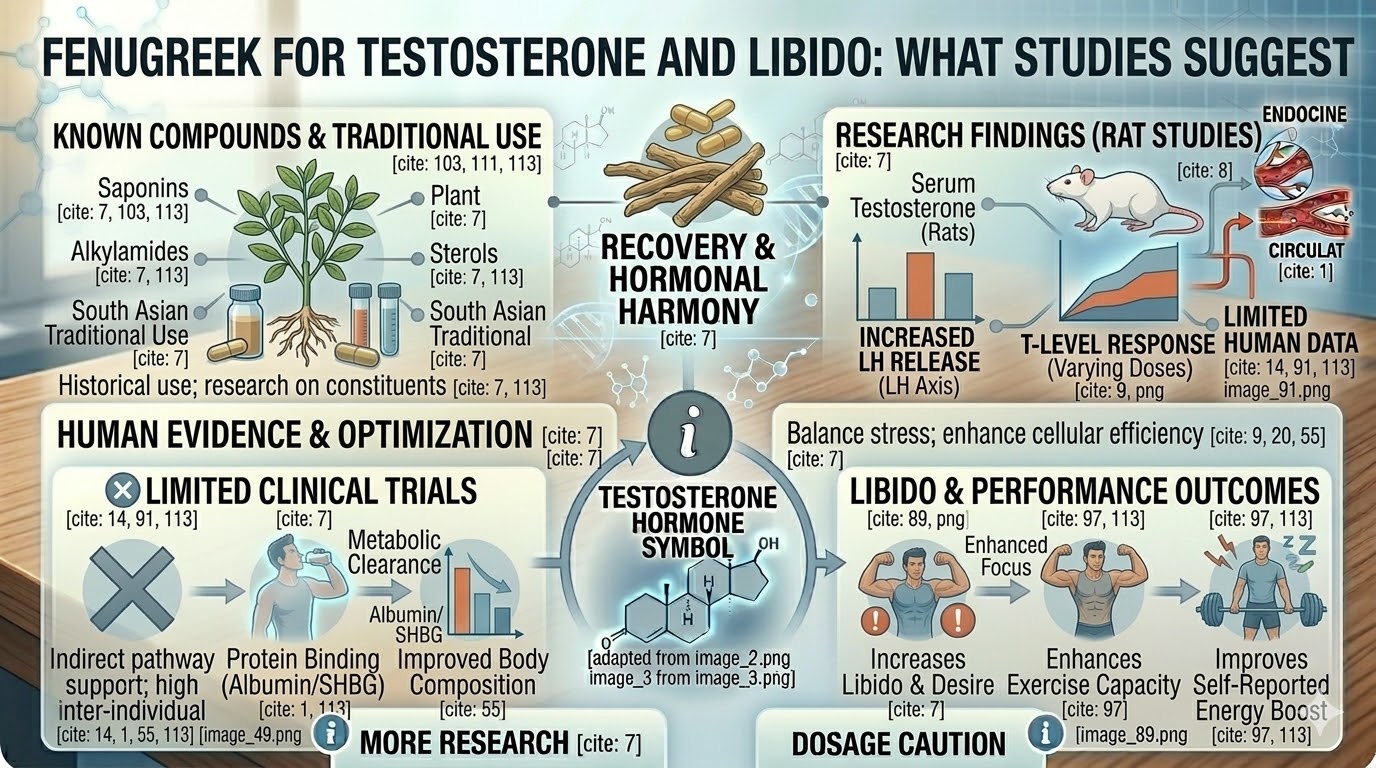
Fenugreek is one of the most commonly included ingredients in testosterone booster supplements.
Traditionally used in herbal medicine, fenugreek has been studied for its potential effects on:
- testosterone levels
- libido and sexual performance
- metabolic health
But does it actually increase testosterone — or are the benefits more indirect?
In this guide, we break down the evidence and what you need to know.
What Is Fenugreek?
Fenugreek (Trigonella foenum-graecum) is a plant whose seeds are commonly used as both a spice and a supplement.
It has been used traditionally for:
- digestion and metabolism
- blood sugar support
- libido enhancement
Modern research has focused on its effects on male hormones and sexual health.
Does Fenugreek Increase Testosterone?
Research on fenugreek and testosterone shows mixed results.
Some studies suggest:
- modest increases in testosterone levels
- improved free testosterone availability
- enhanced strength and body composition
However, other studies show minimal or no significant hormonal changes.
This suggests that fenugreek’s effects may not be consistent across all individuals.
For deeper context on how testosterone works: What Is Testosterone? Functions, Levels, and Why It Matters
Fenugreek and Libido
One of the most consistent findings with fenugreek is its effect on libido.
Studies suggest it may:
- improve sexual desire
- enhance sexual performance
- increase perceived energy and vitality
These effects may be due to:
- hormonal modulation
- improved blood flow
- psychological factors
Learn more: Testosterone and Libido: Hormones, Blood Flow, and Lifestyle Factors
Fenugreek and Free Testosterone
Some fenugreek extracts may influence enzymes involved in hormone metabolism.
This could help:
- reduce conversion of testosterone into other hormones
- increase availability of free testosterone
Explore further: Testosterone Testing 101: Total vs Free Testosterone
Fenugreek and Metabolic Health
Fenugreek has also been studied for its effects on:
- blood sugar regulation
- insulin sensitivity
Since metabolic health is closely linked to testosterone, this may be another indirect pathway.
Learn more: Sugar, Insulin Resistance, and Testosterone
Recommended Dosage
Typical doses used in studies range from:
300–600 mg per day (standardized extract)
Key considerations:
- standardized extracts are preferred
- consistency is important
- effects may take several weeks
Safety and Side Effects
Fenugreek is generally well tolerated.
Possible side effects may include:
- digestive discomfort
- mild odor changes (sweat or urine)
- allergic reactions (rare)
For a broader overview: Testosterone Booster Side Effects: What to Watch For
Who May Benefit Most?
Fenugreek may be helpful for individuals who:
- want to support libido
- are physically active
- are looking for mild hormonal support
It may be less effective for:
- individuals expecting large testosterone increases
- those with already optimized hormone levels
How Fenugreek Fits Into Testosterone Support
Fenugreek is best viewed as a supportive ingredient, not a primary driver of testosterone.
It works best when combined with:
- proper sleep
- balanced diet
- resistance training
- stress management
For a full ingredient breakdown: Best Natural Testosterone Booster Ingredients (Evidence Tiers)
Final Thoughts
Fenugreek is one of the more widely used natural ingredients for testosterone and libido support.
While its effects on testosterone may be modest, its benefits for libido and overall vitality appear more consistent.
As part of a broader approach to hormone health, fenugreek may provide meaningful support — especially when combined with lifestyle optimization.
Frequently Asked Questions
Does fenugreek increase testosterone?
Fenugreek may support testosterone levels modestly in some individuals, but results are inconsistent.
Does fenugreek improve libido?
Yes. Research suggests fenugreek may improve libido and sexual performance.
How long does fenugreek take to work?
Effects may take several weeks of consistent use.
Is fenugreek safe?
Fenugreek is generally safe for most individuals, though mild side effects may occur.
Who should take fenugreek?
It may be beneficial for individuals seeking libido support and mild hormone optimization.
Can fenugreek help with blood sugar control?
Yes, fenugreek has been studied for its effects on blood sugar and insulin sensitivity.
Does fenugreek cause any odor changes?
Some users report a mild maple-like odor in sweat or urine, which is harmless and temporary.
Can women take fenugreek?
Yes, fenugreek is sometimes used by women for libido and metabolic support, though individual responses vary.
Is fenugreek safe long-term?
Fenugreek is generally considered safe for long-term use, but cycling or following product instructions is recommended.
Does fenugreek interact with medications?
Fenugreek may interact with blood-thinning medications and diabetes drugs. Consult a healthcare provider if you take prescription medications.
Related Articles
- Testosterone Boosters Explained
- Best Natural Testosterone Booster Ingredients
- Ashwagandha and Testosterone
- Tongkat Ali for Testosterone
- Best Testosterone Boosters: Reviews, Ingredients, and Buyer’s Guide
Explore the Complete Testosterone Health Hub
Discover how natural ingredients, training, nutrition, and lifestyle work together to support testosterone, libido, and long-term performance.
Visit the Testosterone Health Hub →