






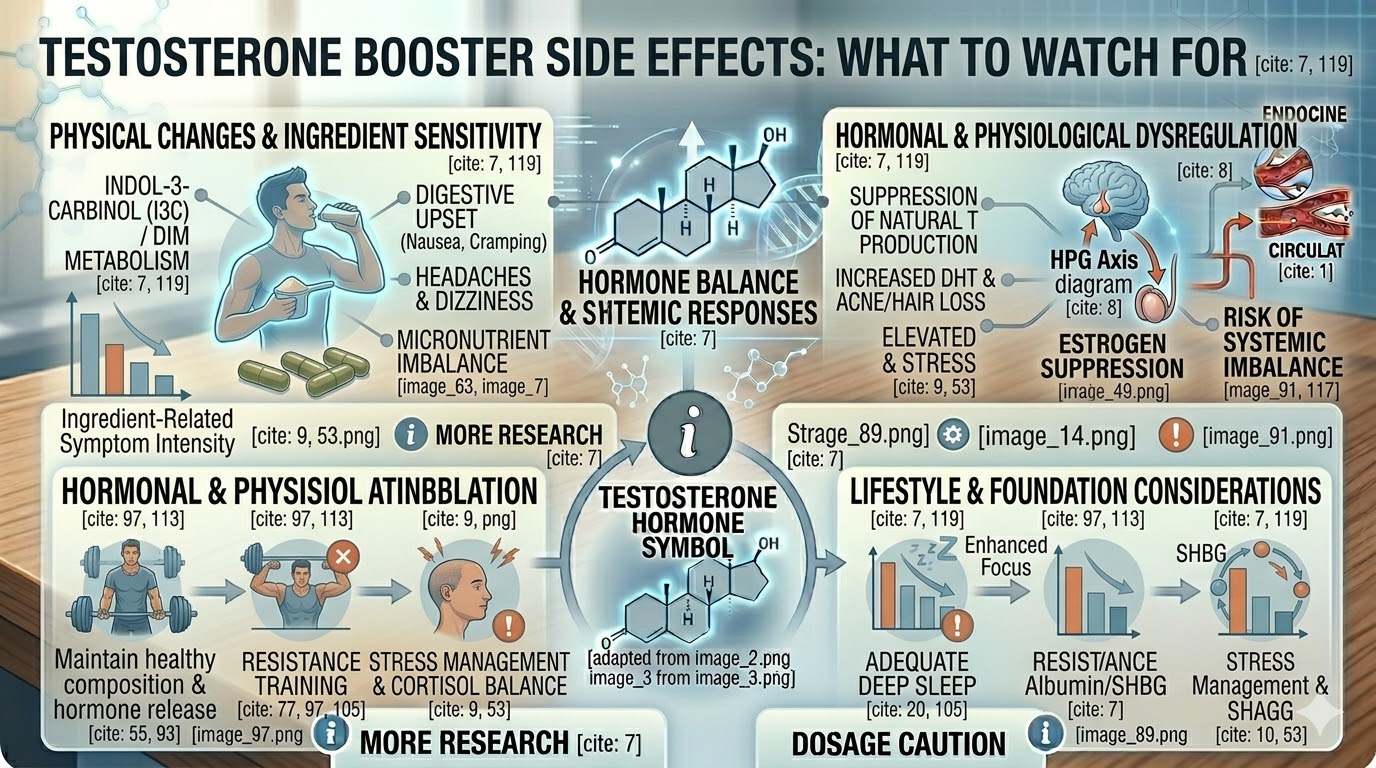
Testosterone boosters are widely used to support energy, performance, and hormone balance.
While many ingredients are considered safe, it is important to understand that not all supplements are risk-free.
Side effects can vary depending on:
- ingredient quality
- dosage
- individual health status
- underlying hormone balance
In this guide, we break down the most common side effects associated with testosterone boosters — and how to use them safely.
Are Testosterone Boosters Safe?
Most natural testosterone boosters are generally safe when:
- used at appropriate dosages
- sourced from reputable manufacturers
- combined with healthy lifestyle habits
However, safety depends heavily on the ingredients used.
For example: Testosterone Boosters Explained: What They Are (and What They’re Not)
Common Side Effects of Testosterone Boosters
Side effects vary depending on the formulation, but some commonly reported issues include:
Digestive Discomfort
Some ingredients may cause:
- bloating
- nausea
- stomach irritation
This is more common when supplements are taken on an empty stomach.
Sleep Disturbances
Certain ingredients may affect sleep, especially if taken late in the day.
For example:
- stimulating compounds
- cortisol-modulating herbs
Poor sleep can actually reduce testosterone: Sleep and Testosterone
Mood Changes
Hormonal shifts can influence mood.
Some individuals may experience:
- irritability
- restlessness
- changes in energy levels
This is often related to how the body responds to hormone changes.
Hormonal Imbalance
Some supplements may influence hormone pathways.
For example:
- DHEA can convert into testosterone or estrogen
- DIM affects estrogen metabolism
Learn more: DHEA for Men: When It’s Useful and When to Avoid It and DIM and Estrogen Balance in Men
Ingredient-Specific Risks
Different ingredients carry different levels of risk.
Low-Risk (Generally Well-Tolerated)
- zinc
- vitamin D
- magnesium
These are essential nutrients and are typically safe within recommended doses.
Moderate Risk (Context-Dependent)
- ashwagandha
- tongkat ali
- fenugreek
These may cause mild side effects depending on:
- dosage
- timing
- individual sensitivity
Explore more: Ashwagandha and Testosterone, Tongkat Ali for Testosterone, and Fenugreek for Testosterone and Libido
Higher Risk or Uncertain Safety
- DHEA
- fadogia agrestis
These ingredients may carry higher risk due to:
- hormonal effects
- limited human research
- potential long-term concerns
Learn more: Fadogia Agrestis: What We Know (and Safety Concerns)
Hidden Risks in Low-Quality Supplements
Not all supplements are created equal.
Risks may increase due to:
- inaccurate labeling
- poor ingredient quality
- contamination
- undisclosed compounds
Choosing reputable brands is critical.
Who Should Be More Cautious?
Certain individuals should be more cautious when using testosterone boosters:
- individuals with hormone-sensitive conditions
- those taking medications
- younger individuals with normal hormone levels
- those considering hormone precursors
How to Minimize Side Effects
To reduce risk:
- start with lower doses
- introduce one supplement at a time
- monitor how your body responds
- prioritize sleep, diet, and training
Lifestyle plays a major role in hormone health: Best Diet for Testosterone and Best Workouts for Testosterone
The Role of Lifestyle
Many side effects can be avoided by focusing on foundational habits:
- sleep quality
- stress management
- body composition
- training balance
For example: High Stress and Cortisol
Final Thoughts
Testosterone boosters can be helpful tools — but they are not without risk.
Most side effects are mild and manageable, especially when using well-researched ingredients at appropriate doses.
However, higher-risk ingredients and poor-quality supplements can lead to unwanted effects.
The safest approach is to:
- focus on lifestyle first
- choose evidence-based ingredients
- use supplements responsibly
Frequently Asked Questions
Are testosterone boosters safe?
Most are safe when used properly, but safety depends on the ingredients and dosage.
What are the most common side effects?
Common side effects include digestive issues, sleep disturbances, and mild mood changes.
Can testosterone boosters cause hormonal imbalance?
Some ingredients may affect hormone levels, especially hormone precursors like DHEA.
Are natural supplements safer?
Generally, yes — but quality and dosage still matter.
How can I avoid side effects?
Start with low doses, choose reputable products, and focus on lifestyle factors.
Can testosterone boosters affect hair loss?
Ingredients that influence DHT may affect hair loss in individuals genetically predisposed to male pattern baldness.
Should I cycle testosterone boosters?
Some ingredients may benefit from cycling, but this depends on the specific supplement and ingredient.
Can testosterone boosters interact with medications?
Yes, some ingredients may interact with medications. Consult a healthcare provider if you take prescription drugs.
Are testosterone boosters safe for men over 50?
Many are safe, but older men should be more cautious and consider medical guidance due to potential interactions and health conditions.
Do testosterone boosters cause weight gain?
Most do not cause weight gain directly, though some users may experience changes in water weight or body composition.
Related Articles
- Testosterone Boosters Explained
- Best Natural Testosterone Booster Ingredients
- DHEA for Men
- DIM and Estrogen Balance in Men
- Best Testosterone Boosters: Reviews, Ingredients, and Buyer’s Guide
Explore the Complete Testosterone Health Hub
Learn how to safely support testosterone using proven strategies, evidence-based supplements, and lifestyle optimization.
Visit the Testosterone Health Hub →