






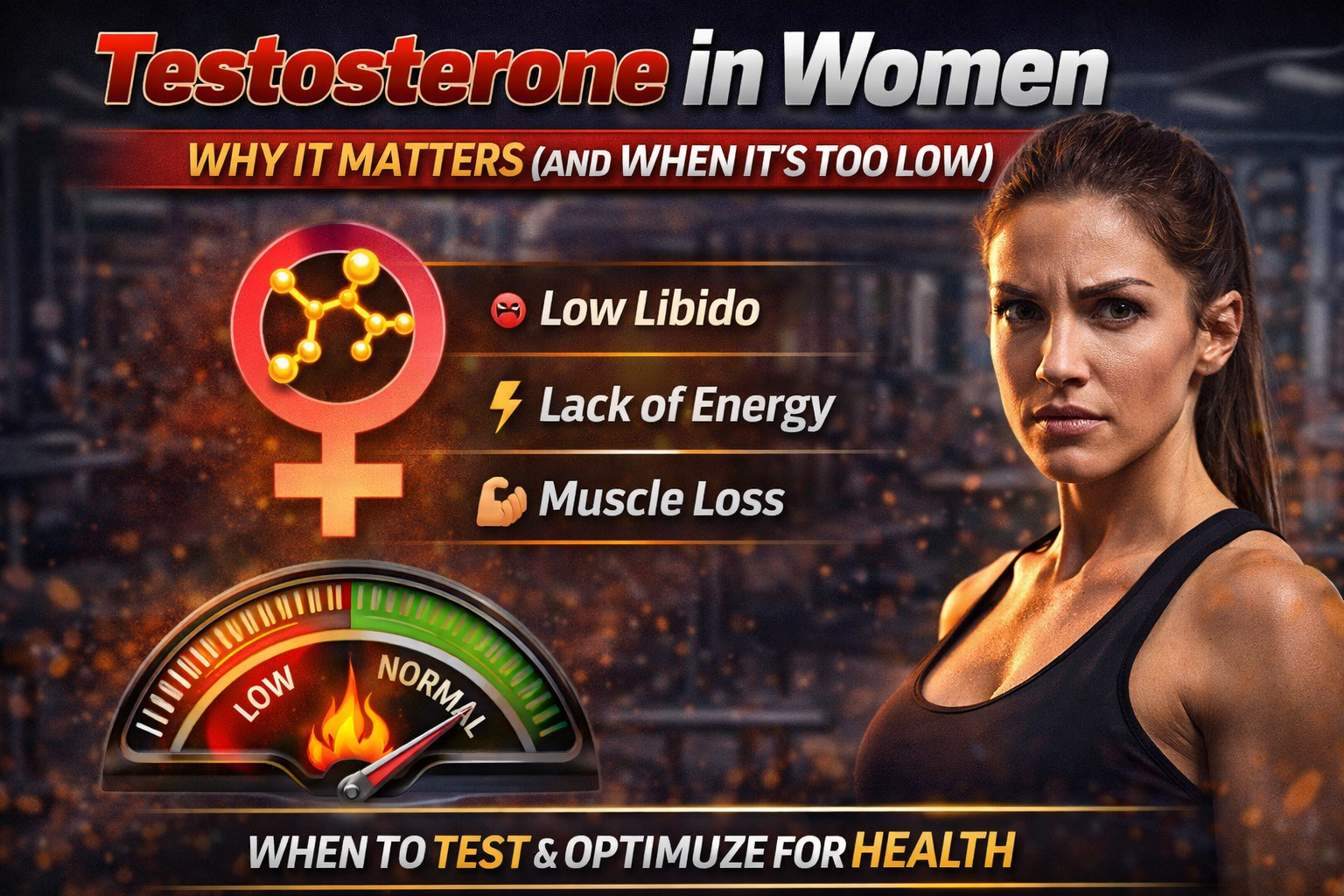
Testosterone is often thought of as a “male hormone,” but it also plays an important role in women’s health.
Women produce testosterone in smaller amounts, yet it contributes to:
- energy levels
- mood and mental clarity
- libido
- muscle tone
- bone health
When testosterone levels become too low, women may experience noticeable changes in how they feel and function.
In this guide, we explore:
- the role of testosterone in women
- symptoms of low levels
- causes of imbalance
- safe ways to support hormone health
What Does Testosterone Do in Women?
In women, testosterone is produced by:
- the ovaries
- the adrenal glands
Although levels are much lower than in men, testosterone plays a key role in:
- supporting libido and sexual desire
- maintaining lean muscle mass
- contributing to motivation and drive
- supporting bone density
Hormones work together as a system, meaning testosterone interacts with:
- estrogen
- progesterone
- cortisol
Learn more about hormone function in our guide on what is testosterone? functions, levels, and why it matters.
Signs of Low Testosterone in Women
Low testosterone in women may present as:
- low libido
- fatigue or low energy
- reduced motivation
- decreased muscle tone
- mood changes
These symptoms can overlap with other hormonal changes, especially during menopause.
Common Causes of Low Testosterone in Women
Several factors can contribute to lower testosterone levels:
Aging and Menopause
Testosterone levels decline naturally with age, particularly during menopause.
Explore further in our menopause hub.
Chronic Stress
High cortisol levels can suppress hormone production. Learn more about high stress and cortisol.
Poor Sleep
Sleep disruption affects overall hormone balance. Understand the connection between sleep and testosterone.
Nutrient Deficiencies
Low levels of key nutrients can impact hormone production:
- zinc
- magnesium
- vitamin D
Read more about zinc, magnesium, and vitamin D.
Testosterone and Libido in Women
One of the most noticeable roles of testosterone in women is its effect on libido.
Low testosterone may contribute to:
- reduced sexual desire
- decreased responsiveness
- lower overall interest in intimacy
For broader context, read our guide on testosterone and libido.
Testosterone Therapy for Women
In some cases, testosterone therapy may be considered under medical supervision.
However:
- it is not appropriate for everyone
- dosing must be carefully controlled
- monitoring is essential
Hormone therapy should always be guided by a qualified professional.
Natural Ways to Support Testosterone in Women
Lifestyle plays a major role in hormone balance.
Key strategies include:
Strength Training
Resistance training supports:
- muscle mass
- hormone regulation
Learn about the best workouts for testosterone.
Stress Management
Reducing stress helps balance hormones. Read more about high stress and cortisol.
Nutrition
A balanced diet supports hormone production. Explore the best diet for testosterone.
Sleep Optimization
Quality sleep is essential for hormonal balance. Understand the connection between sleep and testosterone.
Supplements and Hormone Support
Some supplements may support hormone balance indirectly.
Examples include:
- adaptogens like ashwagandha
- essential nutrients such as zinc and magnesium
Explore further in our guide on the best natural testosterone booster ingredients.
When to Consider Testing
If symptoms persist, hormone testing may be helpful.
This may include:
- testosterone levels
- estrogen and progesterone
- thyroid function
Learn more about labs to check with low testosterone.
Final Thoughts
Testosterone plays an important role in women’s health, even though levels are much lower than in men.
Low testosterone can affect:
- energy
- mood
- libido
- physical performance
The most effective approach is to:
- support hormone balance through lifestyle
- address underlying factors such as stress and sleep
- seek professional guidance when needed
Key Takeaways
- Testosterone is essential for women’s energy, mood, libido, muscle tone, and bone health
- Low testosterone symptoms include fatigue, low libido, reduced motivation, and mood changes
- Lifestyle factors like sleep, stress management, nutrition, and strength training support hormone balance
- Medical supervision is essential if considering testosterone therapy
Explore the Complete Hormone Health Guides
Learn how hormones affect both men and women—and discover safe, science-backed ways to support energy, balance, and long-term health.
Women’s Health Hub → Testosterone Health Hub →Related Articles
Best Natural Testosterone Booster Ingredients
Frequently Asked Questions
Do women need testosterone?
Yes. Testosterone plays a role in energy, mood, libido, and muscle health in women.
What are symptoms of low testosterone in women?
Common symptoms include low libido, fatigue, reduced motivation, and mood changes.
Is testosterone therapy safe for women?
It may be safe under medical supervision, but it is not appropriate for everyone.
Can lifestyle improve testosterone in women?
Yes. Sleep, stress management, nutrition, and exercise all influence hormone balance.
Should women test testosterone levels?
Testing may be helpful if symptoms of hormonal imbalance are present.
Explore the Complete Hormone Health Guides
Learn how hormones affect both men and women—and discover safe, science-backed ways to support energy, balance, and long-term health.
Women’s Health Hub → Testosterone Health Hub →