





Creatine is one of the most proven supplements for strength, muscle growth, and performance, but the labels can be confusing—especially when you see “micronized creatine” next to classic creatine monohydrate. This article explains what each form is, how they differ, and which is best for your goals and budget.
What Is Creatine Monohydrate?
Creatine monohydrate is the original, most researched form of creatine. It is simply creatine bound to a water molecule and is the form used in nearly all major clinical trials on performance, muscle growth, and safety.[11]
- Around 3–5 g per day is enough to saturate muscle stores for most people over time.[11]
- It is widely available, highly effective, and usually the cheapest creatine option.
Read More: What Is Creatine?
What Does “Micronized” Creatine Mean?
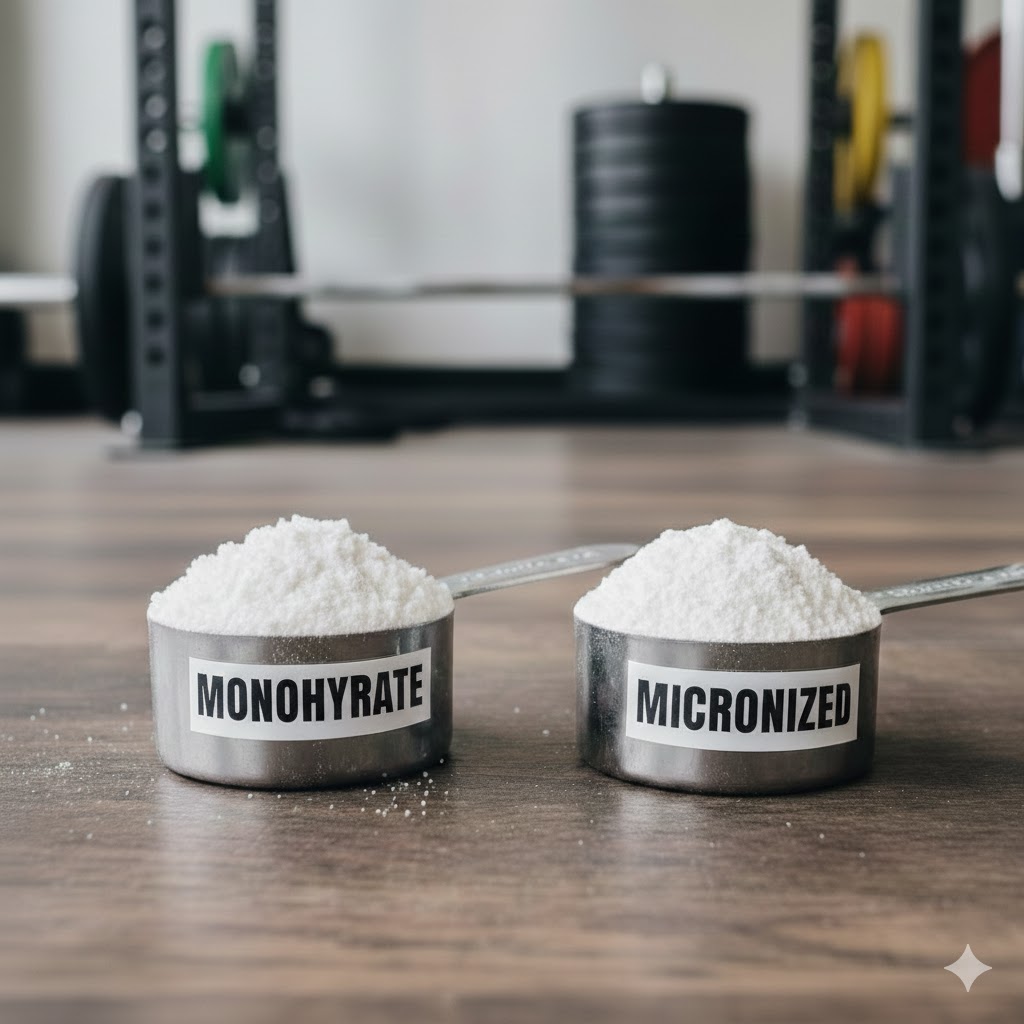
Micronized creatine is creatine monohydrate that has been mechanically processed into much smaller particles. The creatine molecule is the same; only the particle size changes.
- Smaller particles increase surface area, which helps creatine dissolve more easily in water or other liquids.
- The finer texture often mixes smoother and may feel less gritty in shakes.
Read More: How Creatine Works: A Detailed Explanation
Key Differences: Monohydrate vs Micronized
Chemically and physiologically, both forms deliver the same active ingredient—creatine monohydrate. The primary differences are in user experience.
- Solubility and mixability: Micronized creatine typically dissolves more easily, so it clumps less and feels smoother to drink.
- Digestive comfort: Some users who get mild stomach upset with standard monohydrate report fewer issues with micronized powders, likely because they dissolve more completely.
- Cost: Micronized creatine usually costs more due to extra processing, while regular monohydrate is more budget‑friendly.
In terms of performance and muscle gain, studies suggest both forms work equally well when the daily creatine dose is the same.[11]
Which One Is More Effective?
From a results standpoint—strength, power, muscle size, and overall performance—creatine monohydrate is the gold standard, and micronized creatine does not appear to provide extra benefits beyond being easier to mix and drink.[11]
- Muscle creatine saturation depends on total daily creatine intake, not particle size.
- When matched for dose and schedule, both forms should deliver similar increases in muscle creatine levels and performance.
Read More: Creatine and Athletic Performance
Read More: Read more: Creatine and Muscle Growth
Pros and Cons of Each Form
Creatine Monohydrate
Pros:
- Most researched and recommended form.
- Very effective for strength and hypertrophy.
- Best value per gram.
Cons:
- Can feel slightly gritty or sandy in cold water.
- A minority of people report mild bloating or stomach discomfort.
Micronized Creatine
Pros:
- Mixes more easily and tends to be smoother in shakes.
- May be gentler on digestion for those sensitive to regular monohydrate.
Cons:
- Usually more expensive per serving.
- No consistent evidence of superior performance outcomes.
Read more: Best Creatine Supplements for 2025
When to Choose Each Type
You may prefer creatine monohydrate if:
- You want the most cost‑effective, scientifically established option.
- You have no digestive issues with standard creatine.
- You’re comfortable mixing it with slightly warm water or shaking longer to dissolve.
You may prefer micronized creatine if:
- You dislike gritty textures and want the smoothest possible mix.
- You previously experienced minor stomach discomfort on regular monohydrate.
- You don’t mind paying a little extra for improved mixability.
Either way, prioritize products that are pure creatine monohydrate (micronized or not), with minimal additives and, ideally, third‑party testing.
FAQs
1. Is micronized creatine stronger than monohydrate?
No. Both are creatine monohydrate; micronized just has smaller particles and mixes better. Read More
2. Does micronized creatine absorb better?
It may dissolve and empty from the stomach a bit faster, but studies do not show a meaningful difference in muscle creatine levels or long‑term results. Read More
3. Can I switch between monohydrate and micronized without re‑loading?
Yes. As long as your daily creatine intake stays consistent, you don’t need a new loading phase when switching. Read More
4. Which is better for people with sensitive stomachs?
Micronized creatine may be more comfortable because it dissolves more completely. Taking either form with food and plenty of water can also help. Read More
5. Do I need to take more or less creatine if it’s micronized?
No. The standard effective dose (around 3–5 g daily for most users) is the same for both forms. Read More
6. Is micronized creatine a different type of creatine?
No, it is still creatine monohydrate—just processed to a finer powder. Read More
7. Which is best for beginners?
Most beginners do well starting with basic creatine monohydrate because it is cheap, effective, and widely available. Read More
8. Can I mix creatine with my protein shake?
Yes. Either form can be mixed into protein shakes, pre‑workouts, or juice with no loss in effectiveness. Read More
9. Does particle size change creatine’s safety?
No. Safety data are based on creatine monohydrate in general; micronization does not appear to change the side‑effect profile. Read More
10. Which should I pick if price and digestion are both important?
If you tolerate monohydrate well, choose it for best value. If you want smoother texture or had mild GI issues, micronized may be worth the small price upgrade. Read More
Related Articles
- Best Creatine Supplements for 2025: Reviews and Comparisons
- Is Creatine Safe? Busting Myths and Facts
- Creatine Myths vs. Facts: What You Need to Know
References
- Kreider RB, et al. International Society of Sports Nutrition position stand: safety and efficacy of creatine supplementation in exercise, sport, and medicine. J Int Soc Sports Nutr. 2017.
- Kreider RB. Creatine supplementation and exercise performance. Sports Med. 2003.
- Persky AM, Brazeau GA. Clinical pharmacology of the dietary supplement creatine monohydrate. Pharmacol Rev. 2001.
- Forbes SC, Candow DG, et al. Creatine supplementation and skeletal muscle adaptations. Sports Med. 2016.
- Ostojic SM. Creatine as a food supplement for the general population. J Funct Foods. 2021.
- Flexfitness. “Micronized Creatine vs Monohydrate – Pros and Cons.” 2024.
- LivMomentous. “Micronized Creatine vs Monohydrate: The Key Differences.” 2024.
- Happy Strong Healthy RD. “Creatine 101: Which is Better—Creatine Monohydrate or Micronized Creatine?” 2024.
Get the Best of Both Worlds
Now that you understand the differences, experience Creatine Ultimate CRN-5—featuring premium micronized creatine monohydrate for superior mixability and maximum effectiveness.
Get Premium Creatine• Best value
• Proven results
• Smoother texture
• Easy digestion
 Best of Both